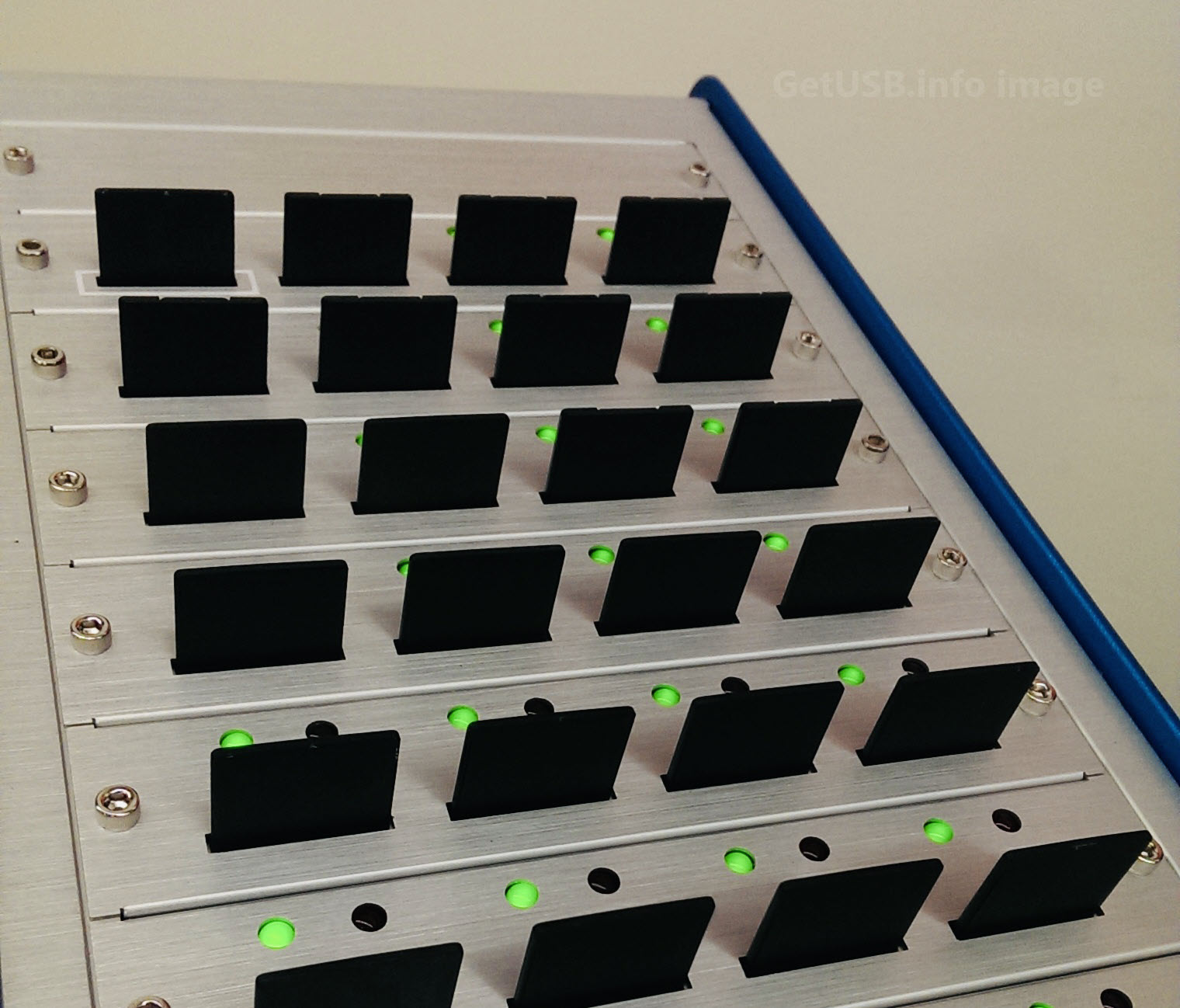
Duplication sounds mechanical.
It’s anything but.
Behind every “copy” command is controller timing, firmware behavior, error handling, and validation logic working in parallel. This section explores how duplication systems actually perform under load — not just how fast they claim to be.
At a glance, duplication looks simple.
Insert master. Insert targets. Press start. Wait for completion.
But the simplicity is deceptive.
A duplication system isn’t just moving files. It’s coordinating multiple controllers at once. It’s managing bandwidth across ports. It’s deciding whether to copy at the file level, the bit level, or as an image. It’s handling slow targets without stalling faster ones. It’s validating results while still maintaining throughput.
Speed is only part of the story.
Under real-world conditions, drives vary in quality. Some throttle when they heat up. Some report capacity that doesn’t exist. Some handle sustained writes cleanly. Others don’t. A duplication system has to respond to all of it — sometimes in parallel across dozens of devices.
Load changes everything.
What works for one device doesn’t always scale to sixteen. Or thirty-two. Or one hundred. Timing shifts. Error rates surface. Power distribution becomes part of the equation. Firmware decisions determine whether a marginal device is flagged, skipped, retried, or passed.
And then there’s validation.
A successful “copy complete” message doesn’t automatically mean integrity. True duplication involves verification methods, comparison strategies, checksum logic, and sometimes controller-level insight into how data was actually written.
Over the years, duplication systems have evolved from simple port replicators to complex controller-driven platforms. Parallel processing replaced sequential copying. Hardware-level commands replaced host-dependent workflows. Performance increased — but so did the need for transparency about what that performance actually represents.
This section looks beyond the headline speeds.
We examine duplication architecture, copy modes, controller interaction, scalability, bottlenecks, validation strategies, and how systems behave under sustained production conditions. Not just in ideal scenarios — but in the messy, mixed-device environments that real operations face.
If you’ve ever wondered why some systems slow down when one drive struggles, how parallel duplication differs from PC-based copying, what “bit-for-bit” actually means in practice, or how validation impacts throughput — this is where we take it apart.
Below you’ll find ongoing analysis of duplication systems — measured under load, explained without marketing gloss, and grounded in how these platforms actually function.