GetUSB.info Logo

USB4 Is Coming: Here Is The Speed

USB 3.2, the most recent widely deployed standard at the time of its introduction, supports maximum transfer speeds of up to 20Gbps under its fastest configuration. USB4 builds on that foundation and raises the ceiling to 40Gbps, with the newer USB4 Version 2 specification extending bandwidth even further to a theoretical 80Gbps. Put another way, 80Gbps is equivalent to moving roughly 10,000MB of data in a single second, or about 10GB per second.

Keep in mind this is all theoretical maximum throughput. Real-world performance will always be lower due to protocol overhead, controller limitations, cable quality, and storage speed. That gap between headline numbers and actual transfer rates has always existed and will continue to do so.

USB4 flash drive concept image

USB4 is built on Intel’s Thunderbolt technology, a high-speed interface Apple strongly promoted starting around 2012. While Thunderbolt delivered excellent performance, licensing costs and strict certification requirements kept accessory prices high and limited widespread adoption. Intel’s long-term goal was always to merge Thunderbolt into USB, bringing higher speeds to the mainstream at more affordable price points.

USB4 maintains backward compatibility with USB 3.2, USB 2.0, and Thunderbolt 3 devices. Because the standard fully embraces the USB-C connector and unifies multiple protocols, manufacturers can design fewer ports while supporting more use cases. As USB4 adoption increases, faster cables, docks, and storage devices are already becoming more common and less expensive.

USB4 devices are also required to support USB Power Delivery, which intelligently manages charging and power negotiation. This allows everything from smartphones to high-performance laptops to draw the correct wattage safely and efficiently from the same port.

Early USB4 products began appearing in the market in 2020, and today the ecosystem is steadily expanding as controllers, cables, and host systems mature. This post was originally prompted by the release of the finalized specification from the governing body, USB-IF, and the momentum behind USB4 has only increased since then.

Continue Reading

Review: Powerhouse 200 Portable Station by Anker

The Anker Powerhouse 200 is a product which you would say “I should have thought of that years ago.” Well this charging station, is truly that, a station of power.

I’m not even going put the features in some lofty gargon sentence, but rather list them off like a spelling test in 5th grade. After you read the following paragraph, I wonder what you will think; here we go…

Input High-Voltage Protection, Output High-Voltage Protection, Input Current Regulation, Automatic Current Matching, Input Short-Circuit Protection, Device Overcharge Protection, Static Resistance, Output Short-Circuit Protection, Output Current Regulation, Battery Overdischarge Protection, Output Temperature Control. That is an awesome sounding product.

Specifications are below, but we couldn’t find out how heavy the Powerhouse 200 weighs.

  • Capacity: 57600mAh/218.8Wh
  • Input: AC/Power Delivery
  • USB Output: 5V=3A (15W)
  • Power Delivery Output: 5V=3A, 9V=3A, 15V=2A, 20V=1.5A (30W)
  • DC Output: 12V=5A
  • AC Output: 110V, 0.9A, 60Hz, 100W
  • AC Waveform: Pure Sine Wave
  • Total Output: 130W Max
  • Operating Temperature: 32°F-104°F / 0°C-40°C
  • Recharging Temperature: 14°F-104°F / -10°C-40°C

Product page from retailer:

About Anker Electronics:

Continue Reading

Features to Consider When Buying a USB Duplicator

Came across an article today that I thought was a very good read. It’s a niche topic, but for anyone who deals with flash drives or media distribution, it’s worth checking out.

From the article:

The optical drive is nearly dead — no longer found in laptops and only rarely included in desktop PCs. As a result, the trend for distributing data has shifted toward USB flash drives instead of CDs or DVDs. Because of this shift, many companies are taking a closer look at purchasing a USB duplicator.

There are several factors to consider before spending thousands of dollars on duplication equipment. The article breaks the most important considerations into four categories. After reviewing these areas, you should have a much clearer understanding of which type of duplicator best fits your organization.

USB Duplication Speed

Speed is the first area to evaluate. This isn’t just about raw copy speed. It also includes the number of USB sockets, the user interface, and how much operational feedback is available during a copy session. Questions worth asking include:

# How many USB drives will you need to copy in a day or week?

# How large is the data load in MB or GB?

# What turnaround time is required between request and completion?

# Is printing or branding required on the USB devices?

# Do you need proof of performance via log files or reports?

Answering these questions helps define the type of USB duplicator you should be looking at: how many ports, what performance level, and what software features are necessary for your workflow.

Buy USB Duplicator

Your Production Crew

The next step is understanding who will actually be running the equipment. Will the system be operated by non-technical staff, or by IT professionals? Does the organization need to restrict access to the system or protect the data content during the duplication process?

This often depends on how the content is delivered. A duplication company might receive physical master drives from clients, while a fulfillment operation might receive files automatically from an online ordering system or internal server.

Another consideration is scale. Will the organization deploy multiple duplicators across different geographic locations? Many global companies standardize on a single manufacturer so the workflow, training, and support experience remain consistent worldwide.

Understanding the people, environment, and operational requirements goes a long way toward narrowing the field.

Read-Only vs. Read-Write

The third category is the final state of the USB media being shipped. Should the drives be read-only, or remain read-write? By default, all standard flash drives are read-write. That introduces risk: files can be deleted, modified, or infected after distribution.

Because of this, many organizations look for USB duplicators that support creating read-only (write-protected) media. With this approach, files cannot be deleted, formatted, or altered, and malware cannot write itself onto the drive. It’s a practical safeguard for training material, software distribution, compliance data, and controlled documentation.

Nexcopy is cited in the article as a world leader in read-only flash drive duplication systems and is used as an example of the type of platform organizations evaluate for secure media production.

Read the full article here

Continue Reading

Commercial Grade USB Solar Charging Station

Legrand now offers the XSOLARCS USB charging station for public works, schools, parks and transportation centers.

With the Legrand solution, there is no construction required in order to install the charging station. The unit is a self contained solar panel tower, with six USB charging ports pulling from the solar panel. There are three shelves which can mount in adjustable locations to the panel tower poll. Each shelf containes two USB ports with up to 3.1A of shared power between them. There is no trenching required or other expensive construction projects in order to get the EXSOLARCS going.

USB sockets are protected from the eliments with a sliding door in front of the two port socket assembly. Not only is there protection, but LED illumination at each port for after-dark identification and ease-of-use. If the light is illuminating, the station can provide a charge. This implies there is some type of battery inside the station, which we’ve emailed Legrand to find out exactly what.

The XSOLARCS was designed with the elimints in mind. The USB charging station is designed to withstand hurricane-force winds and has the full RoHS certificate compliance.

Source: Legrand .

Continue Reading

Off Topic: Interview with Nexcopy CEO, Greg Morris

Nexcopy is a classic entrepreneurial story—starting out in a home garage with a sale on the very first day of business. What began as a small, focused operation has steadily grown into a globally recognized manufacturer in the flash memory duplication and USB technology space. It’s the kind of company story built on persistence, product knowledge, and an unwavering focus on solving real-world production problems for customers.

Tech Company News spent time with the owner of Nexcopy, Greg Morris, to learn more about the company’s origins, its technology, and how the business evolved from a single product idea into a specialized hardware manufacturer serving enterprise, government, and industrial clients worldwide.

Here is a short snippet from that interview.

Question: What kind of technology does Nexcopy offer?

Greg Morris of Nexcopy Answer: Nexcopy has a specific focus on flash memory duplication, printing, and production needs. The business started out with one product geared toward USB duplication. From that single product, Nexcopy’s business expanded into other duplication equipment such as SD card duplicators, microSD card duplicators, CompactFlash duplicators, and more recently, USB Type-C duplicator systems.

During this expansion of hardware platforms, Nexcopy also developed advanced solutions for copy protection of digital files on USB drives and mobile storage devices. These technologies were designed to help organizations protect intellectual property, control distribution, and meet compliance requirements. Several years ago, Nexcopy introduced a USB flash drive printer, which further rounded out the company’s product offering by enabling in-house branding and device customization.

Today, Nexcopy is recognized not just for duplicators, but for a complete ecosystem: devices, duplication systems, controller-level configuration, secure media, and branding equipment. That evolution—from a single garage-built concept to a specialized manufacturer with global reach—reflects a company built on deep technical knowledge and a long-term commitment to its niche.

The full Nexcopy interview is available on the Tech Company News website.

Continue Reading

Not So Funny USB Jokes [11]

What do you call a bee born in the United States? A USB.

When the person who invented the USB drive dies: They will lower the coffin into the grave and realize it’s the wrong direction. Flip it, and try again.

Why do people complain about plugging in USB cables? I always connect them on my second try.

Humorous USB illustration

Amazon offers a USB-powered taillight: It’s used to back up your computer.

Arguing with your wife is like a USB port: You will only be right 50% of the time.

I ate my USB flash drive: It only took 1 byte.

If you are carrying around a USB stick: Do you have mobile data?

What do you call a USB stick in Russia? A “Put-in.”

The USB Type-C design is brilliant: I can’t see a downside to it.

How do you stop an elephant from charging? Take away its USB cable.

Thanks to these guys for inspiration.

Continue Reading

USB Wall Charger With Hidden Surveillance Camera

With USB gadgets like this, it’s hard to imagine how companies like ADT stay in business for residential customers. This functional USB wall charger includes a miniature camera that acts as a discreet surveillance device. You can plug any USB gadget into it for charging while simultaneously recording or streaming video of whatever falls within its field of view.

Using your Android or iPhone, you can stream video directly to the companion app or share access with a group of authorized users. The spy camera records 1080p HD video and also saves footage to the included 32GB microSD card. As a bonus, the camera can be configured to record only when motion is detected.

USB wall charger with hidden surveillance camera

The camera view is fixed directly in front of the wall plug, so there is no ability to pan or tilt the lens. That limitation is easy enough to work around by choosing an outlet that aligns with the area you want to monitor.

Here are some noteworthy features included at the low price of $29 USD:

  • Motion Detection – Can be configured to record only when motion is detected and send notifications directly to your phone.
  • Loop Recording – Automatically overwrites older footage to allow continuous recording.
  • Night Mode – Supports recording in dim or low-light environments.
  • Multi-User Support – Allows multiple users to connect to the same device, supporting up to eight users.
  • Multi-Camera Viewing – Supports up to eight cameras within the same app or software environment.

The Evela spy camera comes with a 32GB microSD card and a USB dongle for reviewing recorded footage. The low-light recording feature works particularly well. For a $29 investment, this device makes sense for frequent travelers who want to check in on their home while away. Another practical use case is monitoring a babysitter or nanny. You can never be too careful, and at this price point, the barrier to entry is minimal.

USB charger spy camera plugged into wall outlet

Visit the product page for the USB wall charger and surveillance camera to see ordering details and customer reviews. The product carries a four-star rating and has been well received.

For background information, Wikipedia offers a general overview of surveillance, which is worth reading before crossing the line into nanny-cam territory.

Continue Reading

Hynix Enters US Market With Ultra-Fast SSD Drive

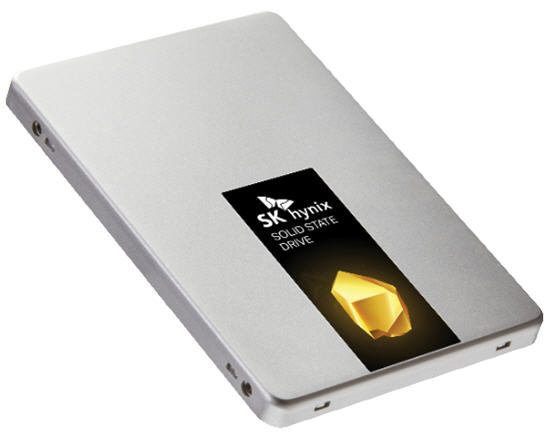
Today, Hynix put out a press release on their Gold S31 solid-state drive (SSD). The SATA III, first generation, is the first of their SuperCore series of products.

With a 560MB/s read speed, this device becomes an ideal SSD for high-demand users such as gamers. What’s also somewhat unique about the new Gold S31 drives is that they are entirely built in-house.

“All key components in Gold S31, from NAND flash and built-in controller to DRAM and firmware, were designed and produced by SK Hynix. The in-house components are built for robust performance and reliability,” SK Hynix says.

SK Hynix G31

What’s more interesting, at least for us right now, is the history of SK Hynix we uncovered while researching the company.

I always wondered what happened to Maxtor, an optical media giant in the early 2000s. It turns out SK Hynix acquired them. Today, SK Hynix is the third-largest conglomerate in South Korea.

Hynix is the world’s second-largest memory chipmaker (after Samsung) and the world’s third-largest semiconductor company. Founded as Hyundai Electronic Industrial Co., Ltd. in 1983, the company has continued to grow steadily ever since.

Hynix memory is well known for quality and is used in products made by Apple, Asus, Google, Dell, Nexcopy, and Hewlett-Packard.

The company also merged with LG Semiconductors in 1999.

These guys reported an operating income of $18 billion for 2018, so this is a company with serious capital and a willingness to spend it to stay competitive. We say good luck with your SSD product in the United States.

Press release source

Source for company history

Continue Reading

Only One USB Drive Can Be Used In Windows – Others Are Ignored

The most common reason why only one USB drive can be used in Windows is due to multiple USBs connected with the same USB device signature, or disk signature collision.

If you are dealing with bootable devices and seeing this problem, we are confident a collision is the issue. If you are not dealing with a bootable device, then our information below will probably not help.

Only 1 USB Drive Can Be Use  In Windows, hard drive sketch image

What is a USB signature collision?

A signature collision can happen on any bootable device, such as Compact Flash cards, SD cards, microSD cards, and USB flash drives. A disk signature is a unique identifier number (UID). It is a unique identifier stored as part of the MBR (Master Boot Record) for an operating system loaded on the device. The operating system uses the UID to identify and distinguish between storage devices. It is commonly made up of eight alphanumeric characters. A disk collision occurs when your operating system (Windows) detects that there are two disks with identical signatures.

For Windows 7, 8, 8.1, and 10, these versions of Windows will disable the second drive and will not allow that second volume to mount until the disk collision has been rectified. If you are reading this article, chances are, this is exactly what is happening to you.

The first thing to do is navigate to the Disk Management tool within Windows. To do this, use the search tool and type in Disk Management. This will take you to the utility that Windows offers. Here you can see your multiple devices connected. If you click or hover over the device not working you will see one of two messages:

“The boot selection failed because a required device is inaccessible” or “This disk is offline because it has a signature collision.”

What created the USB disk signature collision?

Making a bit-by-bit copy of one device to another, like using a USB duplicator, would create a disk signature collision. Because these binary duplicators copy the MBR information, that UID is also copied to the target device. Stepping forward, once those two devices are connected to the same computer, “boom” you get the collision.

Chances are, the situation you are in right now is due to a cloning process you have just completed. But don’t worry, we have the fix!

Fixing a USB disk signature collision

There are two methods for fixing the collision issue. The first solution is using DiskPart, which is a free command line tool provided by Microsoft and is found on all Windows 10 computers. This is a one-by-one process. If you have multiple devices with this problem and need to fix all of them, best to use option number two.

DiskPart Method

To launch DiskPart, simply go to the search function and type DiskPart

You now see the command prompt for DiskPart and type list disk

DiskPart will list all the storage devices connected to your computer. From this list, identify which USB is your problem device. The easiest way to determine this is to check the capacity for the drive listed by DiskPart.

Select the disk you want to change the signature ID for, for example Disk 1, which is the second disk listed (typically disk 0 is your C drive). Type select disk 1

Now that disk one is selected, type uniqueid disk and the utility will spit out the disk signature for disk 1.

Our final step is to change this value. Knowing a hexadecimal value we can use, such as A53AEBE9, type the following in DiskPart: unique disk ID=A53AEBE9 and click Enter.

With this change, you can now go into Disk Management and put the device Online. When the device is online, Windows Explorer will see the device and you can use it. There is no longer a USB disk signature collision.

If your hexadecimal value will not take, it means your MBR file doesn’t have a signature you can change. You will need to flash the device with your bootstrap code. More details on that from a previous article found here.

Another reason why option number two, below, is better is that the hexadecimal number assigned to the partition is automatic and works. There is no guessing on what hexadecimal to assign to the partition, a step you must do in DiskPart.

Partition Wizard utility example

The second solution is downloading the free Partition Wizard and opening the software. The Partition Wizard software will automatically identify the USB disk signature collision and update the necessary MBR. Super simple!

There is more technical information about disk collision issues from Wikipedia. You can brush up on the details there if so inclined.

Continue Reading

Flash Drive Prices Are Going Up – Cause: Japan & S. Korea Trade War

Japan has long been a major supplier of three key elements used in the manufacturing of NAND memory and semiconductors. Due to recent trade tensions between Japan and South Korea, these materials are becoming increasingly difficult to obtain.

Japan produces roughly 90% of the world’s supply of fluorinated polyimide and photoresists, along with about 70% of the global supply of hydrogen fluoride. This concentration places the global supply chain at risk if Japan restricts exports of these materials.

These chemicals are used by Korean manufacturers to produce semiconductors and are critical for making components such as memory chips, microprocessors, and integrated circuits.

The impact is already visible. For the first time in more than eight months, NAND memory pricing for flash drives has increased. While the percentage increase varies by capacity, the most notable jumps are in 32GB and 64GB wafers, which rose nearly 25% week over week at the time this article was published on July 25.

Global semiconductor supply chain affected by Japan and South Korea trade dispute

Japan has cited inadequate management of these chemicals by purchasing countries. Put another way, the materials can also be used in the manufacture of military weapons, and Japan claims some supplies have been diverted for that purpose. Japan’s response has been to impose restrictions on exports.

Who ultimately loses in this trade dispute? Anyone who relies on modern technology. Smartphones, processors, flash memory, circuit boards, and countless other products depend on a stable semiconductor supply chain.

For a more detailed and source-based report, visit this CNBC article.

To learn more about polyimide chemicals, a quick overview is available on this Wikipedia page.

Continue Reading

Hedgehog USB Holder

What can you get with a 3D printer and plenty of flash drives? A hedgehog USB holder. With more than 200 downloads, head over to Thingiverse to grab the 3D printable template. The hedgehog design appears to hold roughly 15 USB devices.

Continue Reading

QuadCore Raspberry Pi 4

Update:

From this article, the Raspberry Pi 4 USB-C power port was designed outside of official USB-IF specifications, making it incompatible with many USB-C chargers and power supplies. You can read more from the link above. The analysis leading to this conclusion was conducted by well-known Google engineer Benson Leung.

The Raspberry Pi is a collection of small computer boards assembled in a simplified way to form the foundation of a computer system. The Raspberry Pi (also known as RPi) was released in February 2012 in the United Kingdom. Its original intent was to provide a low-cost, simple computer platform for students to learn and develop on.

The original model became far more popular than anticipated and quickly expanded beyond its intended educational market into areas such as robotics. The platform does not include peripherals such as keyboards or mice, nor does it ship in a case. It is, quite literally, a bare-bones product.

To give you an idea of its popularity, Raspberry Pi products sold more than 19 million units from their 2012 launch through the end of fiscal year 2018. This places the Raspberry Pi among the best-selling computers in the world, albeit with limited resources. Until now.

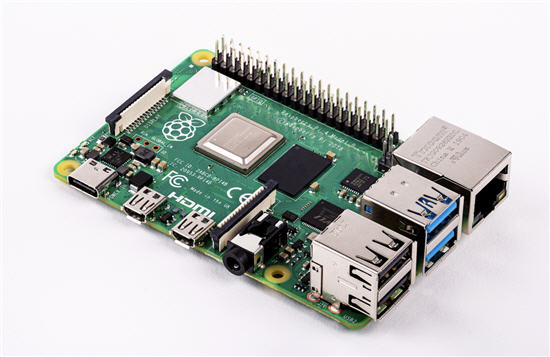
This week, the Raspberry Pi Foundation released the Pi 4. It is an impressive upgrade. Here are the key specifications:

Raspberry Pi 4 board showing ports and components

  • A 1.5GHz quad-core 64-bit ARM Cortex-A72 CPU (~3× performance)
  • 1GB, 2GB, or 4GB of LPDDR4 SDRAM
  • Full-throughput Gigabit Ethernet
  • Dual-band 802.11ac wireless networking
  • Bluetooth 5.0
  • Two USB 3.0 and two USB 2.0 ports
  • Dual-monitor support at resolutions up to 4K
  • VideoCore VI graphics supporting OpenGL ES 3.x
  • 4Kp60 hardware HEVC video decoding
  • Compatibility with earlier Raspberry Pi products

In addition to the hardware improvements, the Raspberry Pi Foundation says the new system includes an extensively modernized user interface, an updated Chromium 74 web browser, and a transition from USB micro-B to USB-C for power. The new connector supports an additional 500mA of current, ensuring a full 1.2A is available for downstream USB devices even under heavy CPU load.

The new boards are available to order now.

In the past, users have attempted running Windows on the Raspberry Pi platform, but performance was predictably slow. With this new configuration, we are curious to hear who has tried it and how it performs. Feel free to share your experience by emailing gmo @ getusb dot info.

Continue Reading

Copyright

Copyright © 2006 +

USB Powered Gadgets and more...

All Rights Reserved

Advertise with us

GetUSB Advertising

This is a high value website providing great exposure to your product and brand. Visit our advertising page to learn specifics.

For more information
Visit our advertising page.

Nexcopy Ad

Nexcopy Provides

USB copy protection with digital rights management for data loaded on USB flash drives.

Contact us learn more

Resources and References Page

Resources and References Page