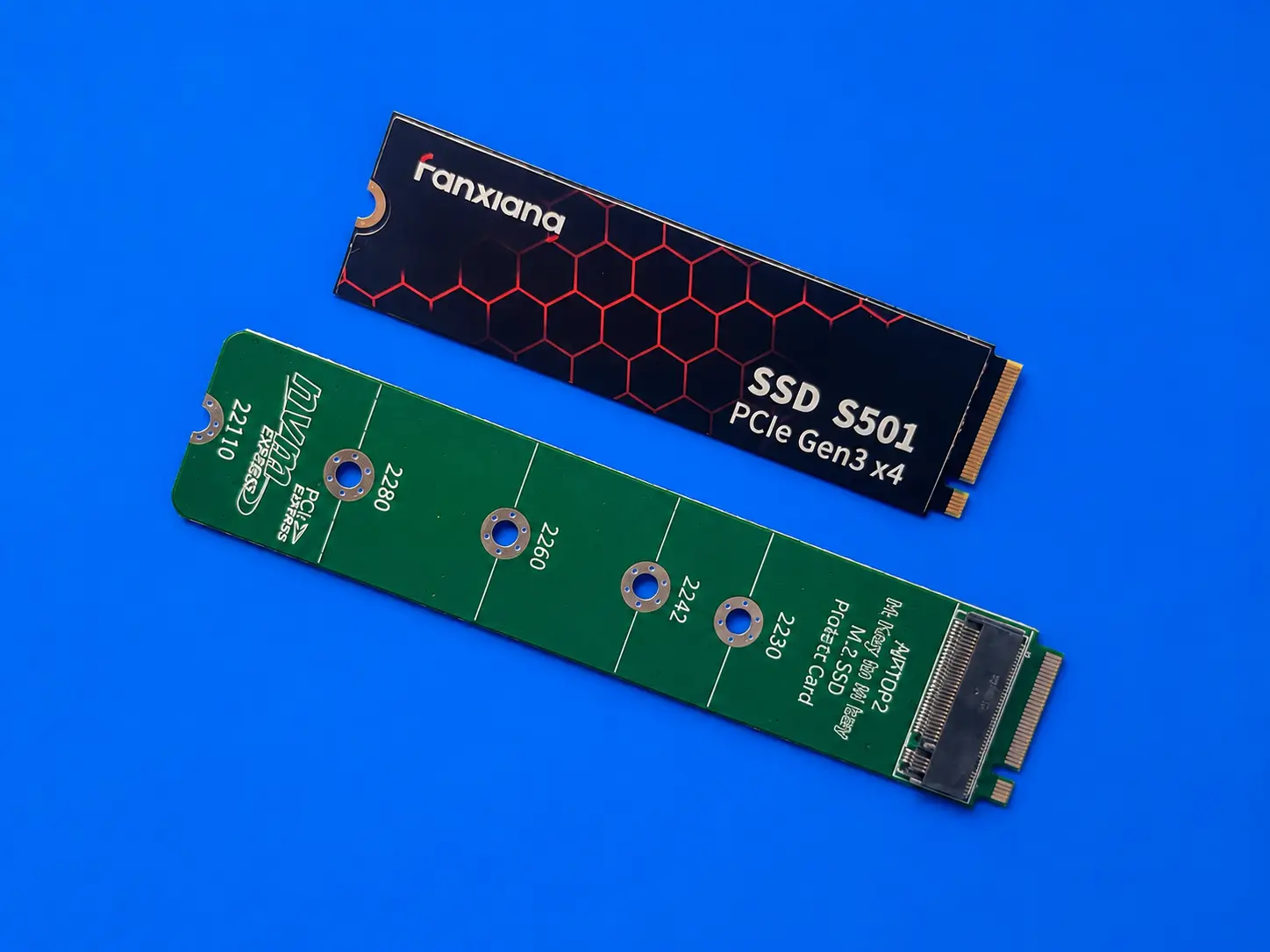
Quantum computing seems to be everywhere these days. Every few weeks there is another headline announcing more qubits, better error correction, or a new record in quantum performance. It is enough to make anyone wonder whether the computer as we know it is about to disappear. Will USB become obsolete? Will storage need to become quantum? Will every cable inside a computer eventually be replaced with something entirely new?
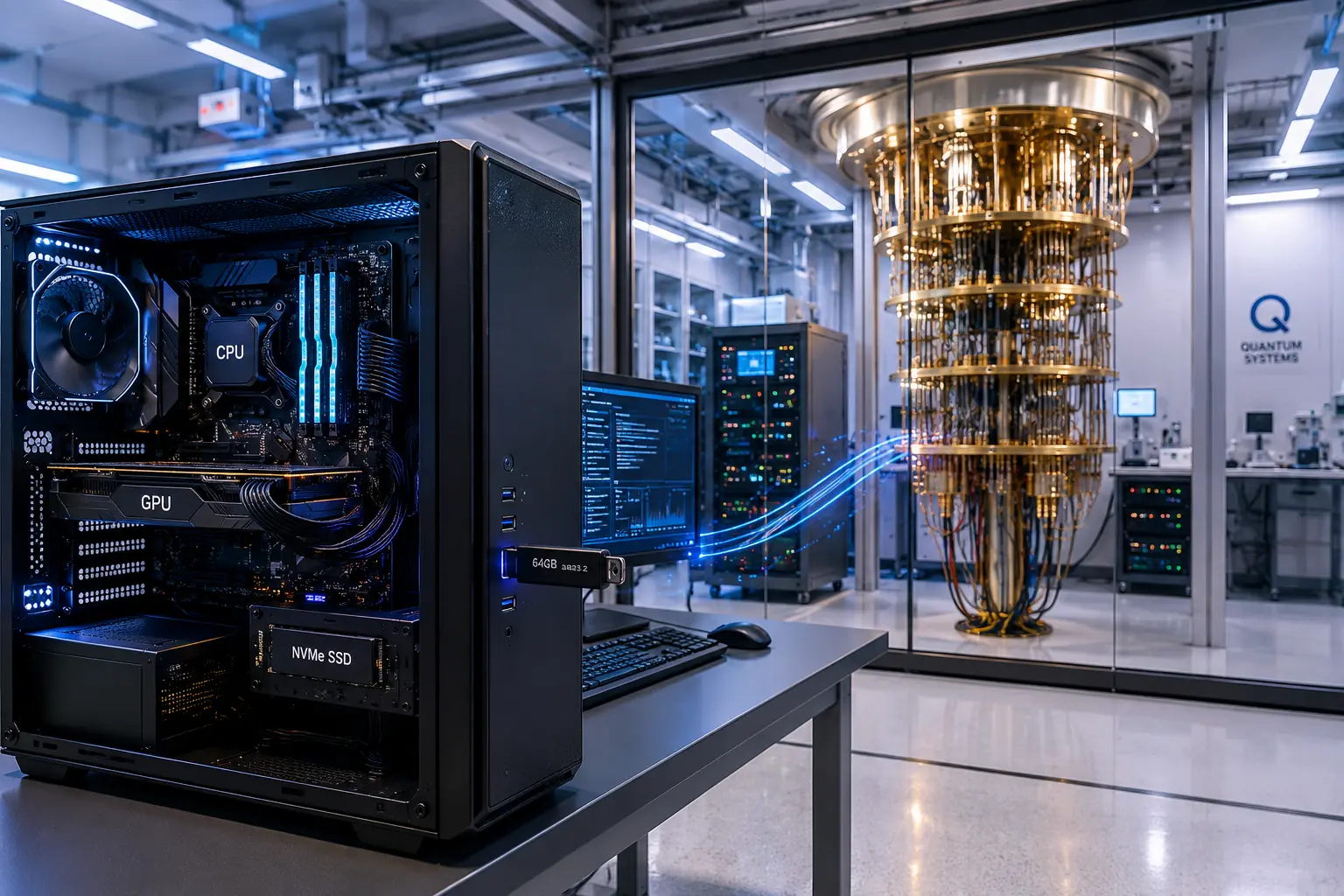
The rapid rise of artificial intelligence has shown us what modern computing evolution really looks like. AI did not replace CPUs, memory, storage, or USB. Instead, it added another specialized processor that works alongside traditional hardware. If you have read our article about why AI computers consume so much memory, you have already seen this hybrid approach in action. Quantum computing is expected to follow the same path. Rather than replacing today’s computers, quantum processors are being designed to work alongside them, creating a hybrid system where each technology does what it does best.
A Quantum Computer Is Not a Replacement PC
It is easy to picture a quantum computer as the next generation of desktop or server hardware, but that is not how these systems operate. A quantum processor is a specialized engine built to solve certain classes of mathematical problems that would take conventional computers an impractical amount of time to complete.
That does not mean everything around the processor suddenly becomes quantum. The operating system, storage devices, networking equipment, memory, monitoring software, and user interfaces remain conventional. In fact, most of the hardware surrounding a quantum processor would look very familiar to anyone who has worked inside a modern data center.
The Classical Computer Does Most of the Work
A useful way to think about a quantum computer is as a highly specialized co-processor rather than a replacement computer. Before the quantum processor begins calculating, a traditional computer prepares the instructions and configures the experiment. During execution, conventional electronics control microwave signals, monitor temperatures, and collect measurements. Once the quantum calculation is complete, another classical computer analyzes the results and determines the next step.
The quantum processor performs the portion of the task where quantum mechanics provides an advantage. Nearly everything before and after that calculation still belongs to traditional computing.
Where Does USB Fit?
This is where USB quietly continues doing exactly what it has always done.
Quantum information is not transmitted over a USB cable, nor was USB ever designed for that purpose. Instead, USB remains the practical interface connecting external storage, keyboards, pointing devices, security keys, diagnostic equipment, firmware updates, removable media, and countless engineering tools used during development and maintenance.
Even inside laboratories housing sophisticated quantum processors cooled to temperatures only fractions of a degree above absolute zero, engineers still rely on familiar computing hardware to build, configure, test, and maintain the system.
The Real Challenge Is Physics, Not Bandwidth
Many people assume that quantum computers must require impossibly fast communication links. Surprisingly, that is not the limiting factor.
Today’s engineering challenges revolve around maintaining stable qubits, reducing noise, correcting errors, and preserving fragile quantum states long enough to complete useful computations. While enormous amounts of quantum activity occur inside the processor, the amount of information ultimately returned to the classical computer is often far smaller than people imagine.
In other words, USB is rarely the bottleneck. The laws of physics are.
Before You Go: The Future Is Hybrid
Perhaps the biggest misconception surrounding quantum computing is the belief that it will replace everything we use today. Recent history suggests something different. Artificial intelligence did not replace CPUs, memory, storage, or USB. Instead, it introduced specialized processors such as GPUs and NPUs that work alongside traditional hardware. As we explained in our article, Inside an AI Computer: Why Modern AI Systems Consume So Much Memory, today’s AI systems are successful because they combine specialized processors with conventional computing rather than replacing it.
Quantum computing appears to be following that same blueprint. Rather than becoming a replacement for today’s computers, quantum processors are being developed as another specialized engine that complements classical computing. Conventional processors will continue managing operating systems, memory, storage, networking, security, and user interaction, while quantum processors tackle the highly specialized calculations where quantum mechanics provides a measurable advantage.
USB fits naturally into that future. It may evolve with faster speeds and new capabilities over time, but its purpose remains remarkably consistent: connecting the everyday devices that make complex computing systems practical. Whether that system includes an AI accelerator, a quantum processor, or both, there will still be a need for dependable storage, peripherals, engineering tools, and universal connectivity.
As exciting as quantum computing has become, the future is unlikely to be a choice between classical computing and quantum computing. Instead, it will be a hybrid environment where each technology contributes its unique strengths. Far from making USB obsolete, quantum computing reinforces the value of the dependable infrastructure already in place. The quantum processor may capture the headlines, but classical computing – and the technologies that connect it all together – will continue doing most of the work.
Editorial Note: This article was prepared after reviewing publicly available information on current quantum computing architectures from leading industry developers and research organizations. The goal is to explain, in practical terms, how classical computing technologies, including USB, continue to play an essential role alongside emerging quantum processors. As with all rapidly evolving technologies, implementation details may change over time, but today’s quantum systems remain fundamentally dependent on conventional computing infrastructure.
Let GetUSB.info keep you updated.
Receive article notifications about USB storage, flash memory, and duplication updates in your preferred language. We average a couple of articles per week.