When most people think about artificial intelligence, they naturally picture software engineers writing code, researchers developing new algorithms, and technology companies racing to release increasingly capable AI models. Recent innovations such as CV Cache demonstrate how much attention is being given to improving processor performance and reducing memory bottlenecks. From the outside, AI appears to be entirely digital. Yet behind every AI response generated today is an enormous amount of physical infrastructure, and that infrastructure is beginning to expose one of the industry’s largest challenges. The limiting factor is no longer simply designing smarter processors or writing better software. It is finding enough skilled people to build and maintain the facilities that allow artificial intelligence to exist in the first place.
Every prompt submitted to an AI assistant is ultimately processed inside a data center. These facilities consume tremendous amounts of electrical power while generating equally impressive amounts of heat. Supporting thousands of high-performance servers requires electrical substations, transformers, switchgear, backup generators, sophisticated networking equipment, fire suppression systems, and industrial-scale cooling. Modern AI data centers resemble manufacturing plants far more than traditional office buildings, and constructing them requires an entirely different set of skills than writing software.
The Digital Economy Depends on Physical Infrastructure
Unlike software, physical infrastructure cannot be deployed overnight. A company may have billions of dollars available to build a new AI facility, but construction progresses only as fast as electricians, mechanical contractors, HVAC techniciansSkilled professionals who install, maintain, and repair heating, ventilation, and air conditioning systems., utility engineers, and other skilled trades can complete the work. High-voltage electrical systems must be installed, inspected, and certified before servers ever arrive. Cooling equipment must be carefully integrated with power distribution systems to ensure reliable operation around the clock. Even seemingly routine tasks become highly specialized when performed at the scale required by today’s AI computing facilities.
As a result, many technology companies are discovering that construction schedules have become just as important as software development schedules. Delays are no longer caused solely by waiting for computer hardware or semiconductor manufacturing. Increasingly, projects are slowed because qualified labor is difficult to find. The shortage of licensed electricians and industrial maintenance professionals has become a practical limitation on how quickly AI infrastructure can expand.
Cooling Is Becoming Just as Important as Computing
One of the less discussed aspects of artificial intelligence is heat. Every watt consumedThe total electrical power used by AI data center equipment, which ultimately converts to heat requiring cooling. by an AI server eventually becomes heat that must be removed to prevent equipment failure. As processors become more powerful, cooling systems become more sophisticated. Many modern facilities now rely on chilled water loops, liquid cooling systems, cooling towers, and complex environmental controls designed to operate continuously with exceptional reliability.
These cooling systems are no longer considered secondary building utilities. They have become mission-critical infrastructure that directly determines how much computing power a data center can support. Designing, installing, and maintaining these systems requires experienced HVAC professionals and mechanical engineers whose expertise has become increasingly valuable as AI continues to expand.
Communities Are Beginning to Ask Difficult Questions
The rapid construction of AI facilities has also created challenges outside the technology industry. Local governments and residents are becoming more involved as proposals for new data centers appear across the country. While these facilities create jobs and investment, they also require significant electrical capacity and, depending on the cooling technology employed, substantial amounts of water. Existing utility infrastructure is often forced to expand alongside new developments, requiring additional substations, transmission lines, and municipal improvements.
In some communities, residents have expressed concerns about electrical demand, water consumption, diesel backup generators, construction traffic, and long-term environmental impact. These discussions have become part of the approval process, causing many projects to spend months navigating zoning meetings, environmental studies, and public hearings before construction can even begin. The growth of artificial intelligence has therefore become as much a community planning issue as it is a technology issue.
Skilled Trades Have Become AI Careers
Perhaps one of the most interesting outcomes of the AI revolution is that it has elevated careers many people never associated with advanced technology. For decades, students were encouraged to pursue software engineering because the digital economy appeared to revolve entirely around programming. While software developers remain essential, AI has highlighted how equally important the skilled trades continue to be. Electricians, utility engineers, industrial HVAC technicians, controls specialists, and high-voltage maintenance professionals now play a direct role in determining how quickly artificial intelligence can grow.
This shift serves as a reminder that every technological revolution ultimately depends on people who build the physical systems supporting it. Artificial intelligence may represent one of the most sophisticated software achievements in history, but it still relies on concrete foundations, structural steel, copper wiring, transformers, cooling equipment, fiber-optic networks, and experienced professionals capable of assembling and maintaining those systems. The digital world may continue evolving rapidly, but it will always remain dependent on the physical world beneath it.
As AI investment continues over the coming decade, the conversation will likely expand beyond processors and algorithms to include electrical infrastructure, utility planning, workforce development, and industrial construction. Earlier in this series we explored why AI is moving compute closer to storage, highlighting how data movement has become one of the industry’s largest technical challenges. That architectural evolution ultimately depends on something much more fundamental: reliable buildings, electrical power, cooling systems, and the skilled professionals who make them possible. The future of artificial intelligence may ultimately be shaped as much by electricians and HVAC technicians as it is by software engineers, reminding us that even the most advanced digital technologies cannot outpace the physical infrastructure that makes them possible.
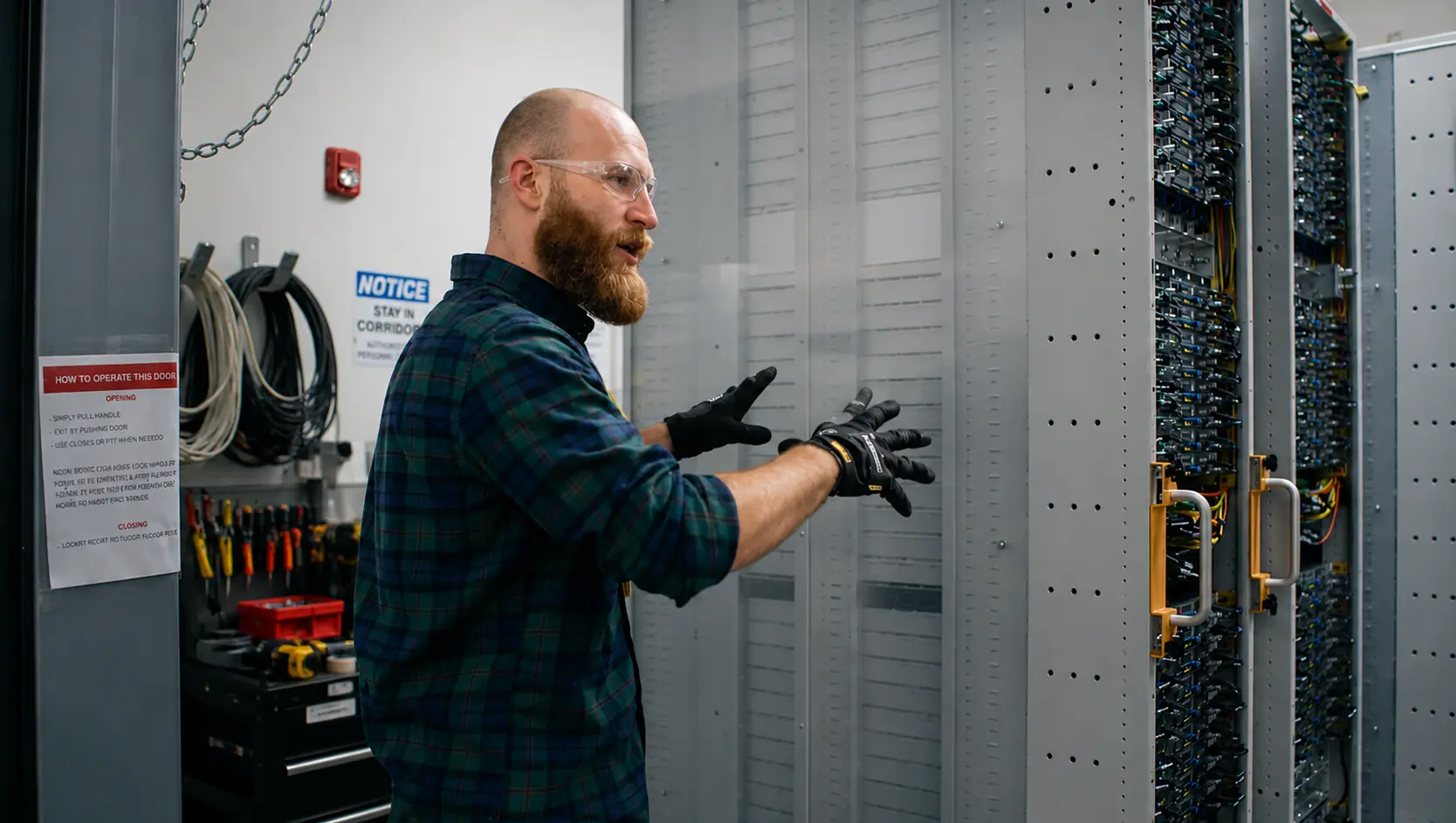
Editorial Note: This article is part of GetUSB.info’s continuing educational series covering artificial intelligence, computing infrastructure, and emerging technologies. Information presented here is based on publicly available reports regarding AI data center construction, utility infrastructure, workforce demand, electrical engineering, and industrial cooling systems. The accompanying image is a licensed stock photograph used for illustrative purposes and does not depict a specific company, facility, or construction project.
Let GetUSB.info keep you updated.
Receive article notifications about USB storage, flash memory, and duplication updates in your preferred language. We average a couple of articles per week.