Most people buying a USB flash drive have never heard of Yangtze Memory Technologies Corporation, better known as YMTC.
That may not remain true for the companies actually building those drives.
YMTC is a Chinese NAND flash manufacturer that has quietly moved from being a relatively small player in the global memory business to one that now deserves serious attention. According to Counterpoint Research, YMTC increased its share of global NAND revenue from 8% in the first quarter of 2025 to 13% in the first quarter of 2026.
For perspective, that puts YMTC right in the same neighborhood as Micron, SanDisk and Kioxia.
That is a pretty substantial change in twelve months.
We recently took a deeper look at the financial and semiconductor-industry side of this story over at GetFlashMemory.info in an article titled YMTC Has Become a Legitimate Global NAND Competitor. But there is another side to the story that is probably more interesting to GetUSB readers.
What happens if YMTC continues expanding NAND production?
Because sooner or later, a change in NAND manufacturing capacity works its way downstream into USB flash drives, memory cards, embedded storage and SSDs.
YMTC is no longer the little NAND company from China
The market-share progression is worth looking at by itself:
| Quarter | YMTC NAND revenue share |
|---|---|
| Q1 2025 | 8% |
| Q2 2025 | 9% |
| Q3 2025 | 10% |
| Q4 2025 | 11% |
| Q1 2026 | 13% |
That progression is important because it doesn’t look like one unusually good quarter. It looks like sustained share capture.
Counterpoint says YMTC’s revenue grew approximately 445% year over year. The company also benefits from strong demand inside China, where electronics manufacturers have an obvious incentive to source more memory domestically whenever they can.
And now YMTC’s parent company is pursuing an IPO that could raise roughly $4.9 billion.
The important part isn’t simply that somebody in China is floating another semiconductor company on the stock market. The filing says the money is intended in part for production-line upgrades and research and development of advanced storage technology.
In plain English: YMTC wants to make more NAND, improve how efficiently it makes NAND and continue developing better NAND.
That gets our attention.
What does any of this have to do with USB flash drives?
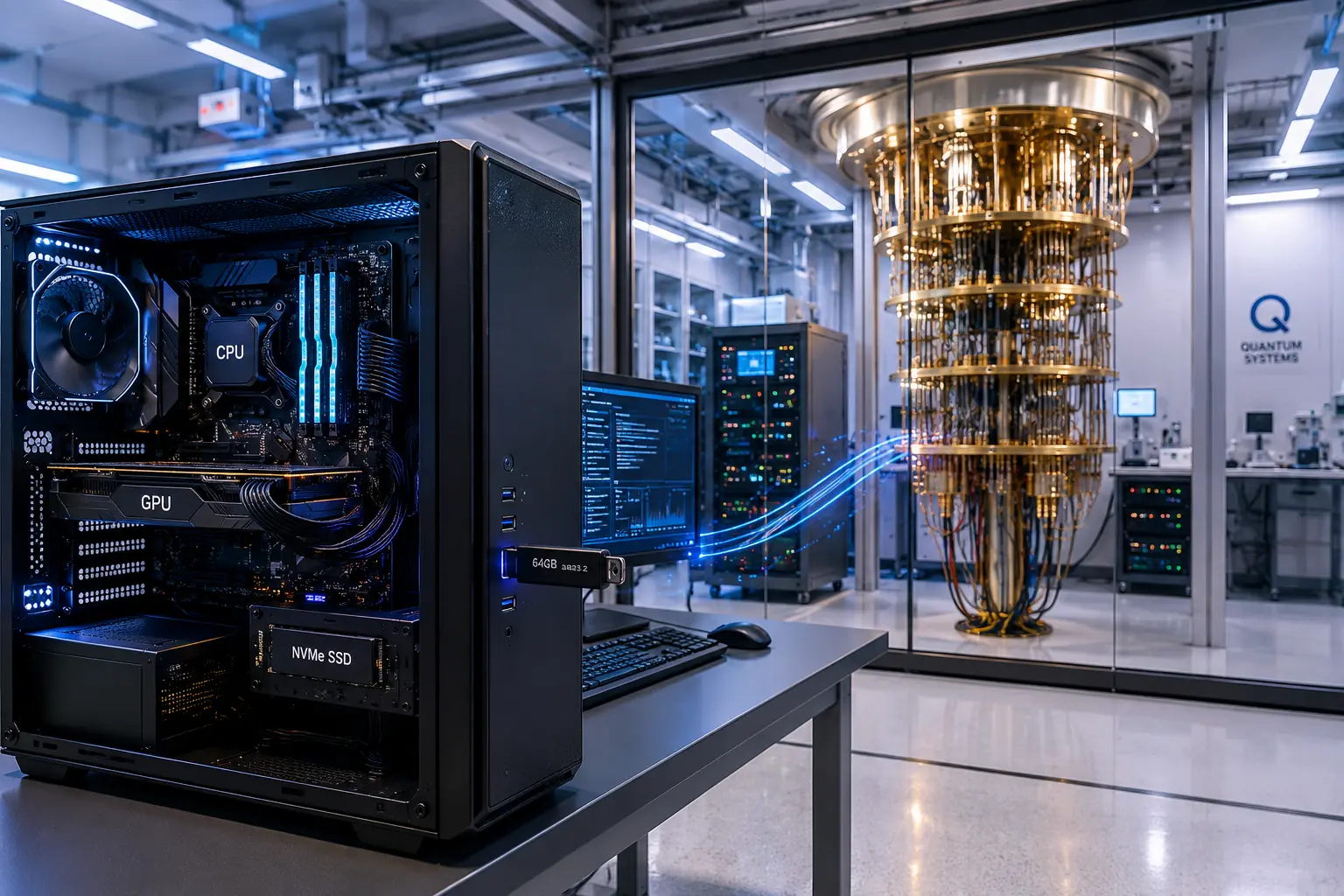
A USB flash drive is a surprisingly simple product from a component standpoint. Strip away the plastic body, connector and PCB and the two parts doing most of the work are the USB controller and the NAND flash memory.
The controller determines much of the drive’s behavior. The NAND determines where your data actually lives.
And NAND is usually the expensive part.
When NAND prices increase sharply, flash drive manufacturers eventually have to absorb that cost, use cheaper grades of memory, reduce capacity, change suppliers or raise prices. When NAND becomes plentiful and prices fall, the opposite happens.
This is why somebody buying a promotional USB drive or a box of flash drives at retail may never know the names Samsung, Micron, Kioxia, SanDisk, SK hynix or YMTC, but what those companies are doing inside their fabs absolutely affects the product being purchased.
Right now AI is pulling NAND in the other direction
The interesting part of the current memory market is that YMTC’s expansion is happening while AI infrastructure is creating tremendous demand for NAND.
Counterpoint reported that the NAND market reached approximately $46 billion in revenue during the first quarter of 2026, up about 90% from the previous quarter and roughly 3.5 times the level from a year earlier. Enterprise SSDs already represented 43% of NAND revenue, and Counterpoint expects that percentage to exceed 60% by the end of 2026.
That’s a huge shift.
The important distinction is that your average person isn’t suddenly buying three times as many USB sticks.
AI data centers are consuming enormous amounts of high-performance storage, and memory manufacturers naturally prefer selling into markets where demand and margins are strongest.
There is another AI effect happening at the same time. High Bandwidth Memory, or HBM, has become one of the critical memory technologies behind AI accelerators. HBM is DRAM rather than NAND, but the extraordinary margins and manufacturing resources being directed toward AI memory change the economics of the broader memory industry.
Manufacturers have a very good reason to dedicate engineering talent, fab investment and wafer capacity toward expensive AI memory instead of fighting over the lowest-margin commodity products.
That creates pressure further down the food chain.
If enterprise SSD manufacturers are willing to pay more for NAND, somebody making a commodity USB flash drive may find himself standing farther back in line.
This is where YMTC becomes interesting
Memory markets have a habit of correcting themselves in fairly predictable ways.
Supply gets tight.
Prices go up.
Manufacturers make very good money.
Everybody decides they need more capacity.
Billions of dollars get spent building and upgrading fabs.
Then one morning the industry wakes up wondering where all this NAND came from.
Prices fall.
Anyone who has worked around flash memory long enough has seen some version of this movie before.
YMTC could become one of the companies helping write the next ending.
Its own IPO filing acknowledges the possibility of NAND oversupply in 2027.
That doesn’t mean NAND prices are guaranteed to collapse next year. AI storage demand could remain strong enough to absorb a tremendous amount of new production. Samsung, SK hynix, Micron, Kioxia and SanDisk will also adjust their own manufacturing plans as market conditions change.
But the ingredients are beginning to look familiar.
2026: strong AI demand and expensive NAND.
2027: additional capacity starts arriving.
2027-2028: supply and demand begin fighting over who was right.
Memory manufacturers are not always famous for getting that last part perfectly balanced.
There is another complication for USB manufacturers
Not all NAND is interchangeable simply because it has the word NAND printed somewhere on the specification sheet.
Flash drive manufacturers have to qualify memory with specific controllers, firmware versions, capacities and production requirements. Changes in NAND die geometry, page size, error characteristics or packaging can require controller firmware support and additional qualification.
So if YMTC continues taking global market share, we shouldn’t expect every USB flash drive manufacturer to suddenly swap its existing NAND for YMTC parts simply because the price looks attractive.
But increased production adds another source of supply to the market, and additional supply creates competition.
Competition has a funny way of affecting everybody’s price eventually.
There is also a sourcing question
YMTC remains subject to U.S. trade restrictions, and that creates an entirely separate issue for companies selling products into government, defense and other regulated markets.
The original GetFlashMemory.info analysis goes into the geopolitical side in more detail, including YMTC’s efforts to reduce dependence on U.S. semiconductor manufacturing technology.
For ordinary commercial USB products, however, the more immediate question may simply be whether YMTC becomes large enough that its production influences worldwide NAND pricing even when its chips aren’t actually inside the flash drive sitting on your desk.
I think the answer is increasingly yes.
The part worth watching isn’t really the IPO
The headline today is that YMTC is raising billions of dollars.
Six months or a year from now, the more important story could be what it does with the money.
Going from 8% to 13% NAND market share in a year is already significant. Doing it while operating under technology restrictions is even more interesting. Add several billion dollars for manufacturing improvements, capacity and R&D and YMTC stops looking like a regional Chinese NAND producer and starts looking like a company capable of influencing the global supply curve.
For GetUSB readers, that’s the connection.
You don’t have to care who ranks third in worldwide NAND revenue.
But if the company fighting for third place eventually helps push NAND from shortage back toward oversupply, the effect will eventually show up in the price and availability of USB flash drives.
And that is something worth watching.
About this analysis: GetUSB.info has covered USB flash drives, NAND storage and removable-media technology since 2006. This article applies current NAND market data to the USB flash-drive industry, where changes in NAND availability, pricing and controller compatibility directly influence the cost, sourcing and production of finished USB storage products. Additional NAND market analysis and source discussion is available in our related GetFlashMemory.info report on YMTC.
Let GetUSB.info keep you updated.
Receive article notifications about USB storage, flash memory, and duplication updates in your preferred language. We average a couple of articles per week.