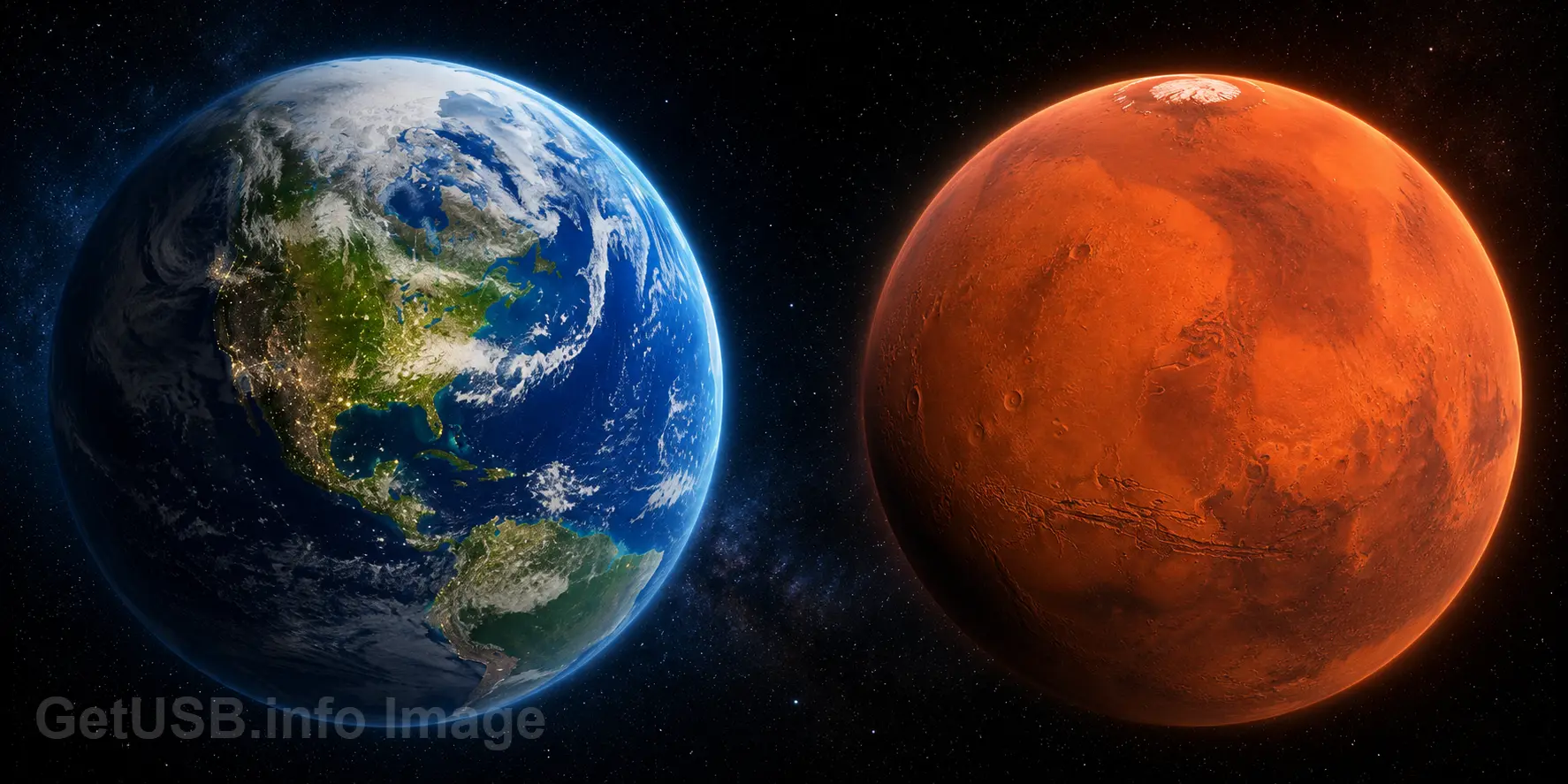
Every time I read a headline about building cities on Mars, my mind goes somewhere completely different. I start thinking about California’s water system.
That may sound like an odd connection, but the more I think about it, the more the two subjects seem related. Southern California is one of the most technologically advanced and economically productive regions in the world. Millions of people live here, supported by an enormous network of roads, reservoirs, aqueducts, power plants, hospitals, and distribution systems. Yet despite all of that infrastructureThe interconnected systems and facilities that support the operation and sustainability of a community or technology., water remains a constant topic of discussion. Droughts, conservation measures, reservoir levels, and long-term supply planning seem to reappear every few years.
The observation isn’t meant as a criticism. Quite the opposite. Moving and managing water across a large state is an extraordinary engineering achievement. The California Department of Water Resources describes the State Water Project as a water storage and delivery system extending more than 705 miles, serving millions of Californians, farmland, and businesses. That alone should remind us that even on a planet perfectly suited for human life, providing basic necessities at scale is far more complicated than it first appears.
That thought inevitably leads me back to Mars.
Looking Beyond the Rocket
Most public discussions about Mars focus on transportation. The conversation usually revolves around rockets, launch schedules, payload capacity, and how many people might eventually make the journey. Those questions are certainly important, but they may not be the questions that determine whether a permanent settlement succeeds.
Getting people to Mars is a transportation challenge. Keeping them alive there is an infrastructure challenge.
The distinction matters because transportation is only the first step. Once people arrive, every system required to support human life must either be imported, constructed, maintained, repaired, or eventually reproduced using local resources. The challenge shifts from reaching another planet to building an environment capable of sustaining a community for years, decades, and eventually generations.
When viewed through that lens, the discussion becomes less about rockets and more about civilization itself.
The Infrastructure We Rarely Notice
One reason Mars settlement can sound deceptively straightforward is because most of us spend very little time thinking about infrastructure. When it works properly, it fades into the background.
Water appears when a faucet is turned on. Electricity arrives when a switch is flipped. Grocery stores remain stocked. Hospitals operate continuously. Waste is collected, roads are maintained, and communication networks remain available around the clock. These systems are so reliable that it becomes easy to forget they represent the combined effort of millions of workers, thousands of companies, and decades of investment.
The same pattern appears in modern technology. A user sees an answer appear on a screen, but behind that moment sits a massive stack of storage, networking, power, cooling, and memory infrastructure. We touched on a similar idea in our article about KV cache and AI memory infrastructure, where the visible result is only possible because of systems most people never see.
A modern city is not simply a collection of buildings. It is a collection of interconnected systems supporting one another. Water systems depend on power systems. Power systems depend on manufacturing and transportation. Transportation depends on maintenance, fuel, logistics, and labor. Remove enough pieces from the chain and the entire structure begins to struggle.
Mars begins with none of those systems already in place.
Building a habitat is an impressive accomplishment. Building an ecosystem of industries capable of supporting that habitat indefinitely is an entirely different undertaking.
The Replacement Part Problem
One of the simplest ways to think about the challenge is to consider what happens when something breaks.
Imagine a mining machine operating on Mars suffers a mechanical failure. Perhaps a gear wears out or a motor stops functioning. Replacing the damaged component sounds straightforward until you begin tracing backward through the requirements needed to manufacture that replacement.
The replacement part requires machine tools. The machine tools require maintenance. Maintenance requires spare parts, skilled technicians, and a supply chain for raw materials. Those raw materials must be mined, processed, transported, and refined. Each step depends on power generation, industrial equipment, and a workforce capable of operating and repairing the machinery involved.
What initially appears to be a single broken component quickly reveals an entire industrial ecosystem hiding beneath the surface. Even something as small and familiar as flash memory depends on global supply chains, energy markets, fabrication facilities, chemical inputs, logistics, and testing operations. That broader relationship was the point behind our discussion of why NAND chips contain almost no oil, yet oil prices still matter.
Earth possesses that ecosystem because generations of people built it over centuries. Mars would have to develop much of it from scratch.
Earth Is Still the Easier Planet
Occasionally Mars is discussed as a long-term backup plan for humanity, particularly when conversations turn toward climate change or environmental challenges. While the idea is understandable, it often overlooks a simple reality: even a stressed Earth remains vastly more hospitable than Mars.
Earth already provides breathable air, abundant water, natural ecosystems, and biological systems that support life without human intervention. Even regions facing environmental pressures still benefit from the existence of a functioning planet beneath them.
Mars offers none of those advantages. NASA describes Mars as a cold, dusty desert world with a very thin atmosphere, along with polar ice caps, seasons, extinct volcanoes, canyons, and weather. That makes Mars scientifically fascinating, but it does not make it a simple place to live.
This is not an argument against space exploration. It is simply an acknowledgment of scale. If humanity eventually develops the ability to construct a truly self-sustaining city on Mars, that same technological capability would likely be powerful enough to address many of the infrastructure and environmental challenges we face here on Earth.
In other words, the technologies required to make Mars livable may be among the most advanced tools ever developed for improving life on Earth.
Exploration Versus Colonization
None of this should be interpreted as skepticism toward exploration itself. Human progress has often been driven by ambitious goals that initially seemed unrealistic. Space exploration has contributed to advances in computing, communications, materials science, navigation, and countless other fields that now feel commonplace.
A research outpost on Mars is one thing. A permanently occupied settlement is another. A self-sustaining industrial civilization capable of surviving independently from Earth represents yet another level of complexity altogether.
Those distinctions are often blurred in public discussions because they all fall under the broad label of “living on Mars.” In reality, each stage requires a dramatically different level of capability and infrastructure.
The difference between visiting Mars and building a civilization there may be larger than the difference between visiting Antarctica and building a self-sustaining nation on the continent.
A Thought Worth Considering
The next time you encounter a headline predicting future cities on Mars, it may be worth pausing for a moment and considering the systems that already support life around us.
The water arriving at a home in Southern California is backed by reservoirs, pipelines, pumping stations, treatment facilities, engineers, maintenance crews, and decades of planning. That network exists on a planet with rivers, rainfall, oceans, and an atmosphere designed for human life.
Mars offers none of those advantages.
Perhaps the greatest challenge of Mars is not reaching the planet. Perhaps the greater challenge is recreating enough of Earth’s infrastructure that people no longer need Earth to survive.
Viewed from that perspective, the question becomes less about rockets and more about civilization. And that may be the most fascinating engineering challenge humanity has ever considered.
Editorial note: This article is an infrastructure-focused opinion piece intended for general technology discussion. It compares large-scale systems on Earth with the practical challenges of long-term Mars settlement, using publicly available references from NASA and the California Department of Water Resources.
Let GetUSB.info keep you updated.
Receive article notifications about USB storage, flash memory, and duplication updates in your preferred language. We average a couple of articles per week.