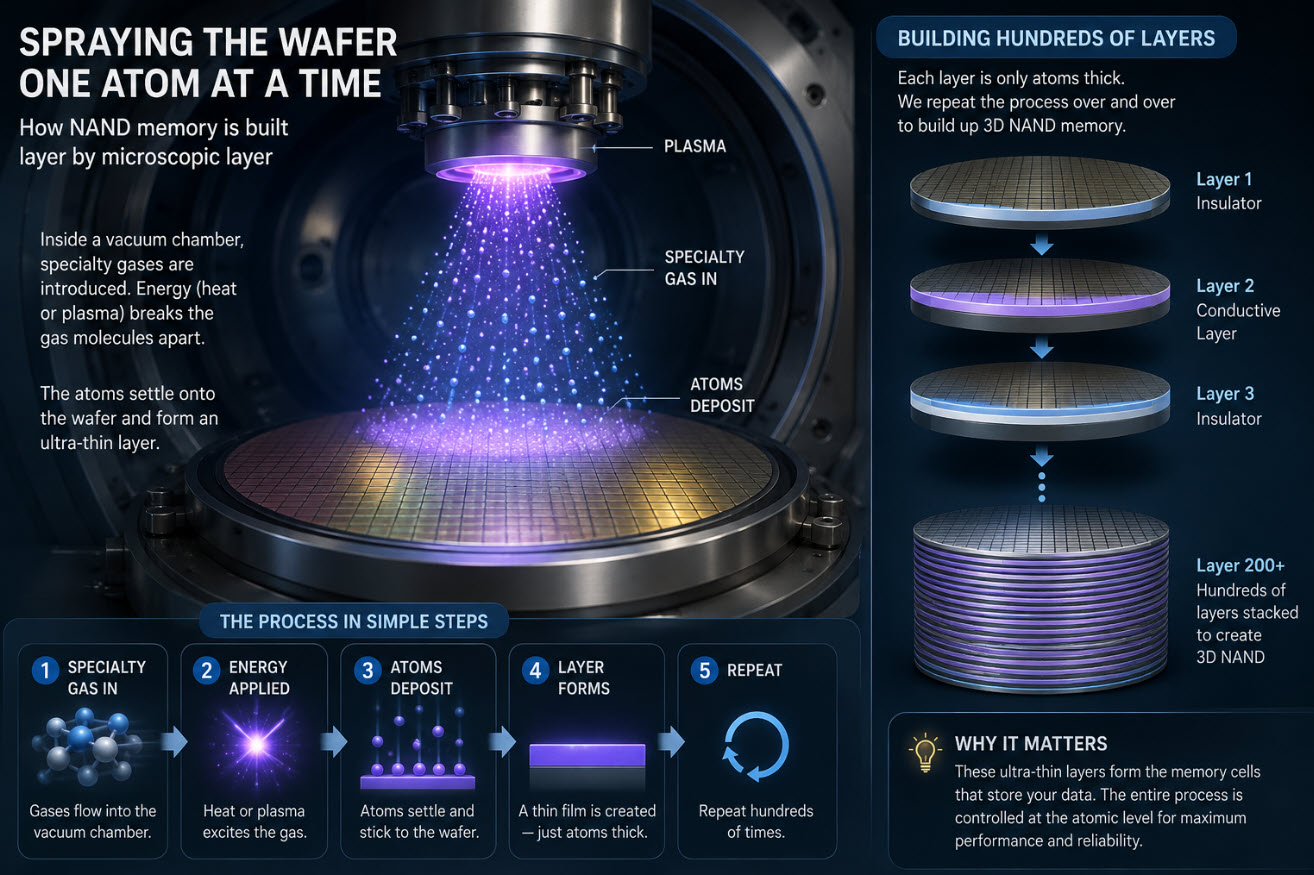
When most people hear about AI infrastructureThe hardware and system architecture designed to support the unique demands of artificial intelligence workloads., the conversation usually revolves around GPUs, High Bandwidth Memory (HBM), or ultra-fast solid-state storage. The assumption is that artificial intelligence runs entirely on bleeding-edge hardware where everything is measured in nanoseconds and terabytes per second.
That assumption isn’t wrong, but it’s incomplete.
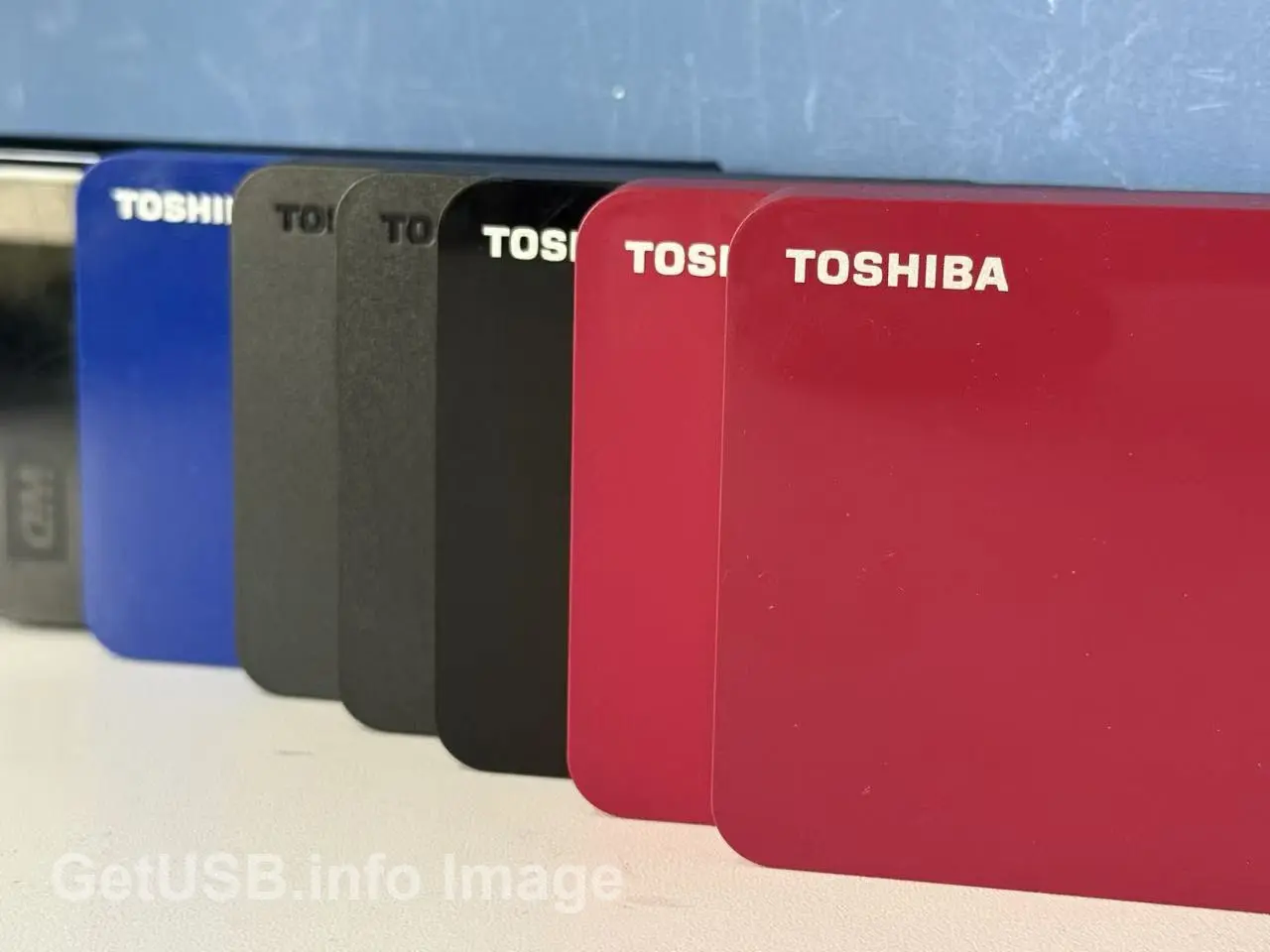
The reality is modern AI systems still depend heavily on one of the oldest technologies in the data center: the mechanical hard drive.
That may sound strange considering we already discussed how AI servers are shifting beyond traditional flash memory in our article: NAND Isn’t Going Away, But AI Servers Now Depend on More Than Flash. We also explored why technologies like High Bandwidth Memory (HBM) are becoming essential to keep AI systems fed with data fast enough to avoid GPU bottlenecks.
But there’s another side to this story that doesn’t get nearly as much attention: sheer scale.
AI doesn’t just need fast storage. AI needs an almost unimaginable amount of storage.
And hard drives are still the only technology capable of delivering that capacity at a cost the industry can realistically support.
Understanding the AI Storage Hierarchy
The easiest way to understand modern AI infrastructure is to stop thinking about a single computer and start thinking about an entire logistics operation.
HBM acts like the loading dock where data is moved at incredible speed. DRAM functions like the active workspace where information is constantly being manipulated. NAND flash behaves more like nearby shelving where fast access still matters, but long-term persistence also becomes important.
Hard drives, however, are the warehouse.
Not the flashy part of the operation. Not the fastest part either. But absolutely the largest.
Tap to view memory technology comparison table
| Technology | Typical Capacity | Primary Strength | Main AI Role |
|---|---|---|---|
| HBM | 80GB–192GB | Extreme bandwidth | Active GPU computation |
| DRAM | Hundreds of GBs | Low latency | Working memory |
| NAND SSD | Multiple TBs | Fast persistent storage | Dataset staging and caching |
| Hard Drives | Petabytes to Exabytes | Capacity efficiency | Bulk storage and archives |
That distinction matters because AI training systems consume data at a scale most people never encounter in normal computing.
A consumer laptop may store a few terabytes of data. Even a high-end workstation might only hold tens of terabytes. AI infrastructure operates several orders of magnitude above that.
While a consumer laptop thinks in terabytes, AI clusters think in exabytes.
A single exabyte equals one million terabytes.
If a modern enterprise hard drive stores 30TB, it would still take more than 33,000 hard drives to build a single exabyte of raw storage capacity.
Large AI operators don’t build one exabyte. They build multiple exabytes across regions, redundancy layers, training environments, backup systems, and archival storage.
The Exabyte Problem
Training a large language model can involve petabytes of text, images, video, telemetry, checkpoints, and archived training states. Once those datasets are collected, they are rarely deleted. They continue growing as models are retrained, refined, and expanded.
During AI training, systems continuously create checkpoints, which are essentially massive save states of the model as it learns. If a cluster fails halfway through a multi-week training cycle, those checkpoints may be the only thing preventing millions of dollars of compute time from being lost.
That means storage infrastructure becomes less about speed alone and more about maintaining gigantic pools of accessible data.
This is where hard drives quietly remain dominant.
Back in 2010, a 2TB hard drive felt enormous. Enterprise environments commonly deployed 300GB or 600GB SAS drives, and anything above a few terabytes was considered premium capacity.
Today, 24TB and 30TB enterprise hard drives are becoming standard deployments inside large data centers. Manufacturers are already testing 40TB+ drives using technologies like HAMR (Heat-Assisted Magnetic Recording), which increases areal density without increasing the physical size of the drive itself.
To put that growth into perspective, a single modern storage rack can now contain more data than an entire mid-sized enterprise data center from 2010.
That’s how dramatically storage demand has changed.
And AI is one of the main reasons why.
AI Runs on More Than Speed
The public discussion around AI tends to focus on GPUs because GPUs perform the visible work. They generate the answers, create the images, and process the tokens.
Storage performs the invisible work of preserving the intelligence pipeline itself.
GPUs are only useful if they can continuously access enormous amounts of training data.
That data has to live somewhere.
Not inside HBM. Not inside DRAM. And certainly not entirely inside expensive NAND storage tiers.
It lives primarily on massive hard drive infrastructure.
A modern AI data center may contain hundreds of petabytes of stored data. Some hyperscale environments likely push well beyond that into exabyte-scale architecture. Trying to store all of that entirely on NAND flash would be financially unrealistic, even for the largest cloud providers.
This is the part many people miss when discussing AI hardware.
Performance matters, but economics matter too.
The industry loves marketing IOPS and benchmark numbers, but large AI deployments are ultimately constrained by total cost of ownership.
Hard drives continue offering the lowest cost per terabyte in large-scale deployments. They also remain extremely efficient for storing cold data, archived datasets, backup snapshots, model checkpoints, and bulk training information that does not need nanosecond access times.
Why Hard Drives Still Work for AI
There’s also another misconception worth clearing up: people often assume hard drives are unusably slow for AI environments.
That’s not entirely true.
A single hard drive is slow compared to DRAM or NAND flash, yes. But AI data centers don’t operate on single drives. They operate on enormous storage arrays with parallel access across thousands of disks simultaneously.
More importantly, many AI workloads involve sequential streaming of large datasets rather than tiny random transactions. Sequential workloads happen to be one of the areas where modern enterprise hard drive arrays still perform surprisingly well.
In other words, AI infrastructure is not always asking, “What is the fastest storage possible?”
Sometimes it’s asking:
What is the fastest practical way to store 500 petabytes without bankrupting the company?
That’s a very different engineering problem.
AI Infrastructure Is Becoming a Layered Memory Ecosystem
This also explains why newer technologies are being layered into AI systems rather than replacing older technologies outright.
In our article about Storage Class Memory: The Missing Layer Between DRAM and NAND, we explored how the industry keeps creating intermediary layers to balance speed, persistence, and economics.
We also explored how NAND is attempting to move closer to memory-level performance in: High Bandwidth Flash: Can NAND Finally Act Like Memory?.
AI infrastructure is becoming exactly that: a layered memory ecosystem.
HBM handles immediate computation. DRAM manages active workloads. NAND flash absorbs fast persistent storage tasks. Storage-class technologies attempt to bridge latency gaps. Hard drives provide the massive capacity foundation underneath everything else.
The future of AI storage is not one technology replacing another.
It’s multiple technologies stacking together because no single memory type solves every problem well.
That’s probably the biggest misunderstanding surrounding AI infrastructure today. People assume the newest technology automatically kills the older one.
But history rarely works that way in computing.
Hard drives survived SSDs because the world kept producing more data faster than flash pricing could decline. Now AI is accelerating that trend even further. The amount of information being generated, retained, copied, and retrained is exploding so quickly that capacity itself has become a strategic resource.
Ironically, the more advanced AI becomes, the more important large-scale storage infrastructure becomes along with it.
Which means one of the oldest technologies in the data center may continue playing a critical role in AI for much longer than most people expected.
Editorial Note: This article is part of the ongoing AI infrastructure and memory architecture series published by GetUSB.info. The article was researched and written with AI-assisted editorial support for structure and readability, then reviewed and refined by the GetUSB editorial team for technical accuracy, continuity, and clarity.
The accompanying image used in this article is an original photograph captured by the GetUSB.info team and is not stock photography.
Let GetUSB.info keep you updated.
Receive article notifications about USB storage, flash memory, and duplication updates in your preferred language. We average a couple of articles per week.