Most file security focuses on access, but the real issue starts after the file is opened
There is a small moment in the life of a file that almost nobody pays attention to, and it is probably the most important moment of all. It is not when the file is created. It is not when it is saved. It is not even when someone decides to password-protect it or encrypt it. The moment that matters most is the second after the file is sent, because that is the point where ownership of the environment disappears and, with it, most of the control people assumed they still had.
That is the part many conversations about file security tend to glide right past. Someone creates a PDF, an MP3, or an MP4 file, sends it to the intended recipient, and mentally checks the job off the list. From that point forward, however, the file is no longer operating inside the sender’s rules. It is sitting on someone else’s system, under someone else’s control, behaving like every other file on that machine. It can be copied, renamed, forwarded, uploaded, dragged into cloud storage, or passed to a co-worker in a matter of seconds. None of that requires advanced knowledge. That is simply how digital files behave once they have been released.
This is why the real problem is usually misunderstood. Most people ask whether a file can be opened, but that is not the most important question. The more useful question is what someone can do with the file after they open it. Those are two very different things. A file can be protected at the point of access and still be completely uncontrolled at the point of use. That distinction is where most of the damage happens, especially for content that actually has value.
Think about the most common cases. A company sends out a PDF with product pricing, a confidential training guide, or a legal document meant for a limited audience. A musician, voice coach, or trainer distributes MP3 files. A business owner ships MP4 video content for onboarding, certification, internal communication, or paid instruction. In every one of those situations, the sender usually assumes the file is still somewhat tethered to their intent. It is not. Once delivered normally, the file becomes a free agent. It may still be your content, but it is no longer behaving on your terms.
This is also why passwords and encryptionA security process that encodes data to prevent unauthorized access., while valuable, do not solve the full problem. Encryption is excellent when the threat is loss, theft, or unauthorized access to a device sitting unattended somewhere. If a USB drive is lost in an airport parking lot or left in a conference room, encrypted data is exactly what you want because it prevents the wrong person from opening what is on the device. But once the intended recipient enters the password and the content becomes available, the role of encryption is largely finished. At that point the user can interact with the file in the normal ways the operating system allows.
That is why the difference between copy protection and encryption matters so much. One secures the container. The other governs what happens to the content once it is being used. We covered that distinction before in our article about USB copy protection vs USB encryption, and it is still one of the most important lines to draw for anyone dealing with sensitive or monetized content. If the concern is a lost device, encryption is the answer. If the concern is duplication after delivery, then encryption alone is solving the wrong problem.
The mindset shift is simple, but it changes everything. Instead of asking whether someone can access a file, start asking how that file is allowed to behave once access is granted. That sounds like a subtle change in wording, but it is a major change in strategy. A PDF might be allowed to display but not print. A video might be allowed to play but not be extracted. An audio file might be fully usable, but only while the original device is connected. Now the goal is no longer just to lock a file. The goal is to define its boundaries while it is in use.
That is where controlled USB distribution starts to make sense again, and it is also why the humble flash drive is much more useful than people give it credit for. In the right implementation, the USB device is not just storage. It becomes part of the control system itself. The file is no longer a loose asset that can be moved anywhere and still behave exactly the same way. Instead, it becomes content that expects a specific environment, a specific viewer, and a specific hardware presence in order to function correctly.
This approach is especially helpful for PDF files because documents are often where people have the strongest false sense of security. A sender adds a password, disables a few permissions, maybe checks a box about printing or editing, and assumes the issue is handled. But in the real world, once the document is visible, it can often be recreated, re-saved, screen captured, or otherwise preserved outside the original control mechanism. The document may have started life with restrictions, but those restrictions do not always travel very far once the recipient begins interacting with the content.
MP3 files have their own problem, and it is even more straightforward. Audio is extremely easy to copy, organize, rename, and redistribute. There is almost no friction involved. Once someone has the file, they can put it in a different folder, load it into different software, attach it to an email, or duplicate it a hundred times without any degradation. That is one reason controlled distribution matters for voice content, training programs, premium audio, and spoken-word media. The weakness of the format is not technical quality. The weakness is how easy it is to set loose.
MP4 video files are often where the economic damage becomes most obvious. Video usually costs more to create, carries more perceived value, and is harder to replace once it starts circulating outside the intended audience. Training departments, course creators, manufacturers, legal teams, and internal communications groups all run into the same basic issue. The file gets delivered for a valid reason, but after that it starts to wander. It is uploaded to a share drive, copied to a laptop, or passed to someone who was never supposed to have it in the first place. We touched on this idea before in a broader media context with USB movie sticks, and the basic lesson still holds up well today: the value of content is closely tied to how much control remains after distribution.
This is why the more accurate way to think about the problem is not file protection in the old sense, but behavior control. A secure distribution system should allow the recipient to consume the content without quietly turning that recipient into a new distributor. That is the real danger with ordinary file delivery. It does not just provide access. It unintentionally transfers distribution rights in practical terms, whether the sender meant to do that or not.
When done correctly, the file is no longer just an asset that somebody now possesses. It becomes an experience delivered under conditions. The PDF opens, but it remains inside a secure viewer. The audio plays, but it is not meant to be peeled off the device and dropped elsewhere. The video runs as intended, but it is tied to the environment from which it was delivered. That is a completely different philosophy from traditional file sharing, and for sensitive content it is usually the more honest one.
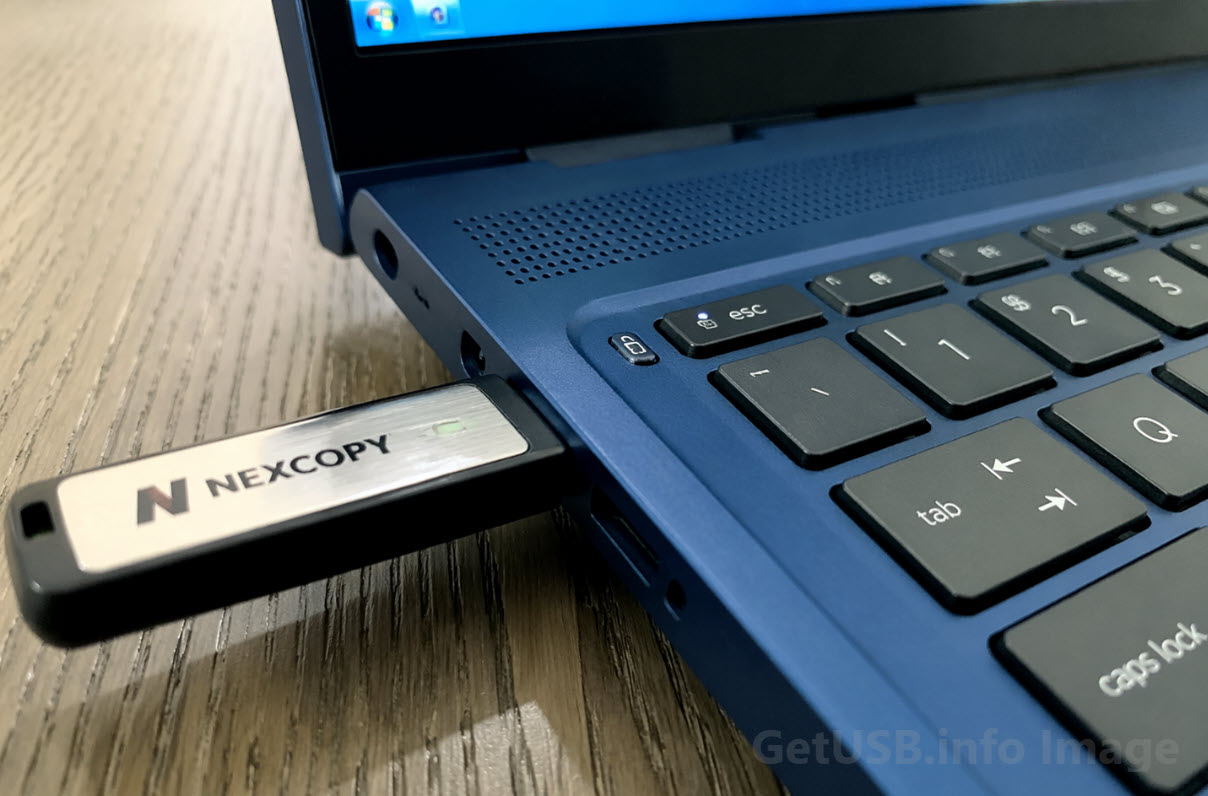
A real-world example of this approach is Nexcopy’s Copy Secure USB copy protection solution. The idea is not to hide files behind mystery or make them inaccessible to the intended user. The idea is to control the environment in which those files operate. The content lives on controlled media, access is governed through a secure application layer, and the USB device itself becomes part of the trust model. Remove the device, copy the content elsewhere, or try to separate the files from the original context, and the usefulness of the copied material changes dramatically.
That difference matters because it gets closer to what people are actually trying to accomplish. Most organizations do not want to make content impossible to use. They want it to be easy for the right person to use and difficult for that same content to spread beyond the intended boundary. Those are not the same thing, and the market often pretends they are. In practice, the challenge is not opening a file. The challenge is preventing the file from turning into an uncontrolled digital object the minute it leaves your hands.
So the next time someone says they are sending a protected PDFA PDF file secured to restrict unauthorized access or usage beyond opening., a secure MP3An MP3 audio file protected to control its use and prevent unauthorized copying or distribution after access., or a controlled MP4A hardware component that manages data flow between a USB drive and its memory chips., it is worth stopping for a second and asking one follow-up question. After the recipient opens it, what exactly happens next? If the answer is that the file behaves like any normal file on a normal computer, then the sender has not really solved the hard part. They have only delayed the beginning of it.
That is what’s worth remembering here. In most cases, the danger is not the first access. The danger is the life the file begins after access is granted. Once you see that clearly, the old way of thinking about file security starts to look incomplete. Because in the end, if you sent the file in the usual way, chances are you did not just share it. You gave it away.
Let GetUSB.info keep you updated.
Receive article notifications about USB storage, flash memory, and duplication updates in your preferred language. We average a couple of articles per week.