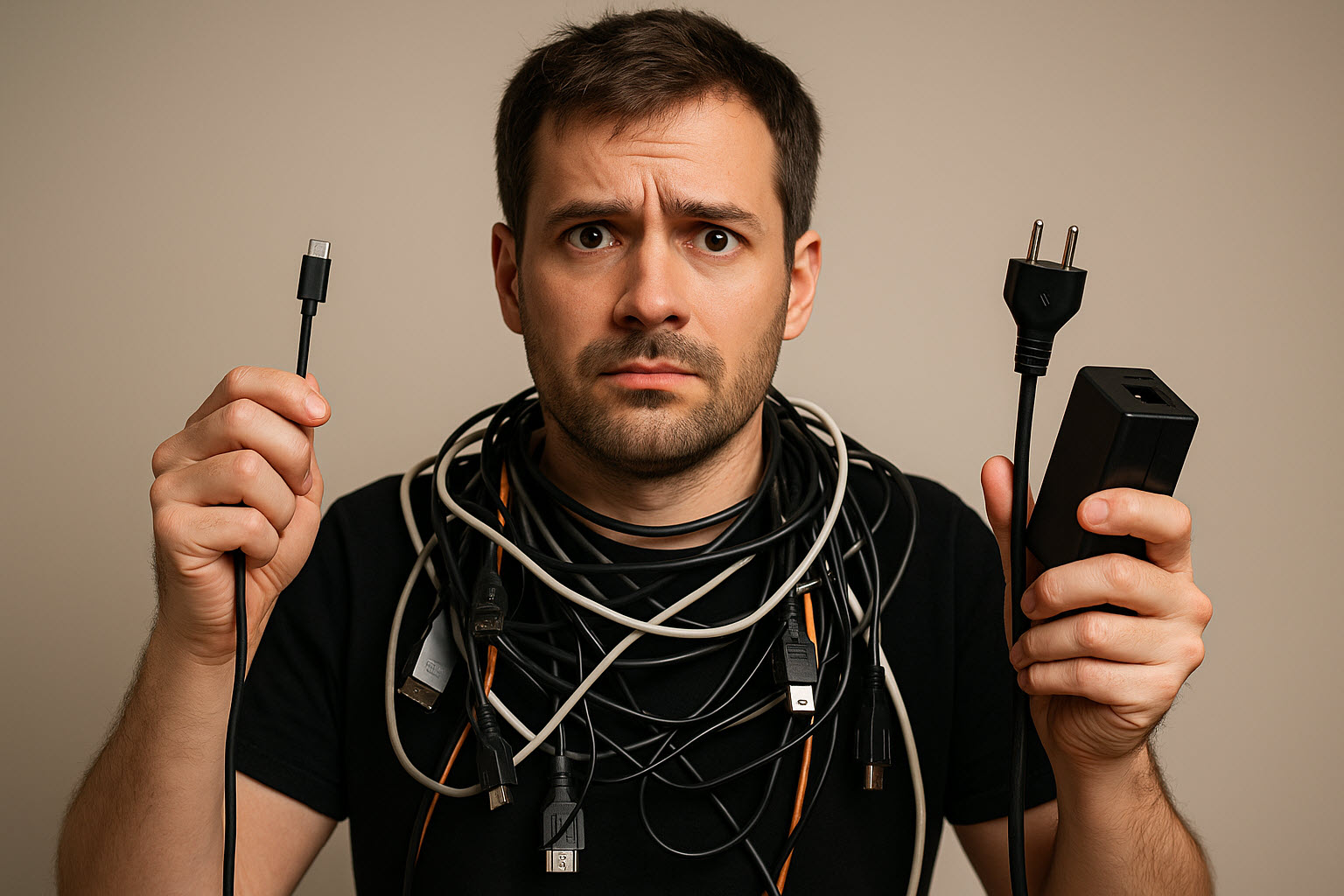
The EU Finally Reins In Computer Cable Chaos, Forcing a Universal USB-C Standard Across All Devices
It only took the tech world about 45 years to agree on one cable. The European Union is finally doing something that makes sense: they’re mandating USB-C on all power bricks by 2028. That means phones, tablets, laptops, and just about anything else that charges through a wall plug will need to play nice with USB-C.
This rule doesn’t just cover devices — it applies to chargers themselves. Each power brick must have a detachable USB-C connector and a way to identify its power rating, so consumers can tell at a glance whether a cable can handle a coffee-mug heater or a laptop. The EU says it’s about reducing e-waste, but honestly, it’s also about saving us from that drawer full of mystery cords that look like a nest of black snakes.
According to EU Directive 2022/2380, this move could help reduce charger waste and improve consumer clarity across the board. By 2030, regulators estimate significant power savings — and maybe, just maybe, a few less headaches for the rest of us.
The USB Market Is Still Partying Like It’s 1999
While marketing teams keep shouting about USB 4 and Thunderbolt 5, the truth is that most of the world still runs on older tech. The legacy USB market is a billion-dollar business. Manufacturers aren’t walking away from that revenue unless someone — like the EU — forces their hand.
Industry doesn’t move as fast as press releases. Somewhere out there, a 1980s CNC machine is still chugging along thanks to a USB-to-Serial adapter. It’s not pretty, but it works. Engineers call it “production continuity.” The rest of us call it duct tape for data.
And don’t expect it to disappear soon. With the explosion of IoT devices — sensors, meters, widgets, you name it — the USB standard keeps finding new life. It’s the universal translator of the hardware world: simple, cheap, and everywhere.
How Many USB Devices Can You Plug In Before the Universe Collapses?
Every lab tech eventually asks the question: “Can we just add one more?” Technically, USB supports 127 devices per controller. Realistically? Try a dozen high-draw peripherals and watch your laptop start gasping for air.
Power delivery, bandwidth, and latency all have limits — and physics doesn’t care how many RGB gadgets you bought on sale. That four-tier daisy chain of keyboards, audio interfaces, and SSDs might look cool until half of it disconnects during your presentation. The takeaway: treat USB like coffee or whiskey — a little goes a long way.
Cable Madness Over, Maybe
Every few years, someone claims USB is “solved.” Then the connector changes again, and everyone scrambles for new cables. But here’s the truth: USB isn’t just a port it’s the glue that holds decades of hardware together. From dusty factory machines to cutting-edge drones, it’s the one standard that actually stuck. Here is a breakdown of USB speeds if interested in a side journey.
So here’s to progress that finally looks practical. If the EU’s USB-C mandate really does what they say, we might all get to open our drawers one day and actually know what plugs into what. Until then — keep your hubs powered, your cables labeled, and your chargers compliant.
Let GetUSB.info keep you updated.
Receive article notifications about USB storage, flash memory, and duplication updates in your preferred language. We average a couple of articles per week.