The Assumption That Everything Should Be Cloud-Based
Spend enough time around modern IT discussions and you start to hear the same assumption repeated over and over: everything should be cloud-based, always connected, always synced. For most environments, that works. It’s efficient, scalable, and easy to manage.
But there’s a quiet reality sitting just outside that conversation—kind of like how, deep down, we all know being off your phone is healthier than being on it, even if we don’t always act that way.
There are still entire industries where that model doesn’t hold up. Not because they’re behind—but because their requirements are different. In those environments, physical media hasn’t disappeared. It’s become more intentional.
And in many cases, microSD cards are right in the middle of that decision.
Where Physical Media Still Makes Sense
When you step back and look at where removable media continues to show up, a pattern starts to form.
These are environments where systems are air-gapped by design, where data delivery must be exact and repeatable, where regulatory requirements demand traceability, and where network access is limited, unreliable, or simply not allowed.
In other words, places where convenience takes a back seat to control.
Healthcare: Controlled Data in Regulated Environments
In healthcare, data isn’t just data—it’s liability, compliance, and patient trust all wrapped together.
Medical imaging systemsDevices and technologies used to create visual representations of the interior of a body for clinical analysis and medical intervention., diagnostic equipment, and embedded devicesSpecialized computing systems integrated into larger devices to perform dedicated functions. often rely on removable storage for updates or data transfer. Not because they can’t connect to a network, but because doing so introduces variables.
A microSD card provides something simple but critical: a known input. The data is prepared, verified, and delivered in a fixed state. No background sync issues, no partial updates, no unexpected changes.
In environments where audit trails matter and data integrity is non-negotiable, that kind of control still wins.
Aviation: Proven, Predictable, Offline
Aviation is one of the clearest examples of why physical media persists.
Aircraft systems are intentionally isolated. Avionics updates, navigation data, and maintenance logs are often loaded through controlled, offline processes. That’s not a limitation—it’s a design choice.
Wireless updates may sound modern, but in aviation, modern isn’t the goal. Proven is.
A microSD card, prepared and verified before it ever touches the aircraft, delivers a repeatable and certifiable method of updating systems. The process is understood, documented, and trusted.
Automotive: Manufacturing and Field Updates
In automotive environments, especially on the manufacturing floor, consistency is everything.
Thousands of vehicles may need the exact same firmware, configuration, or system image. MicroSD cards are often used to deploy that data across production lines and service operations.
The advantage is straightforward: every unit receives the same input, without relying on network conditions or server availability. There’s no risk of pulling the wrong version or dealing with incomplete downloads.
It’s controlled distribution at scale.
Military and Defense: Air-Gapped by Design
If there’s one sector where physical media is not just relevant but required, it’s military and defense.
Many systems are deliberately disconnected from any network. That’s the point. The only approved way to move data into those environments is through physical media that can be controlled, inspected, and verified.
In that context, a microSD card isn’t just storage—it’s a security boundary.
The logic is simple: if you can control the media, you can control the data entering the system.
The Problem with Standard Removable Media
Here’s where things start to break down.
Standard microSD cards were never designed with compliance in mind. They’re interchangeable, easy to modify, and difficult to track once deployed.
That creates a few obvious problems: data can be altered after distribution, cards can be swapped without detection, and there’s no built-in way to prove which device went where.
For industries that depend on traceability and accountability, that’s a gap.
Where Controlled Media Changes the Equation
This is where the conversation shifts from storage to control.
Controlled media introduces two key elements that standard removable storage lacks: the ability to lock content so it cannot be modified, and the ability to uniquely identify each piece of media.
Together, those features turn a simple microSD card into something closer to a managed asset.
Platforms like Nexcopy have leaned into this idea, focusing less on raw duplication speed and more on how the media behaves after it leaves the production environment. For additional context on how controlled media compares to traditional security approaches, see this breakdown of USB copy protection vs USB encryption.
MicroSD Duplication with Compliance in Mind
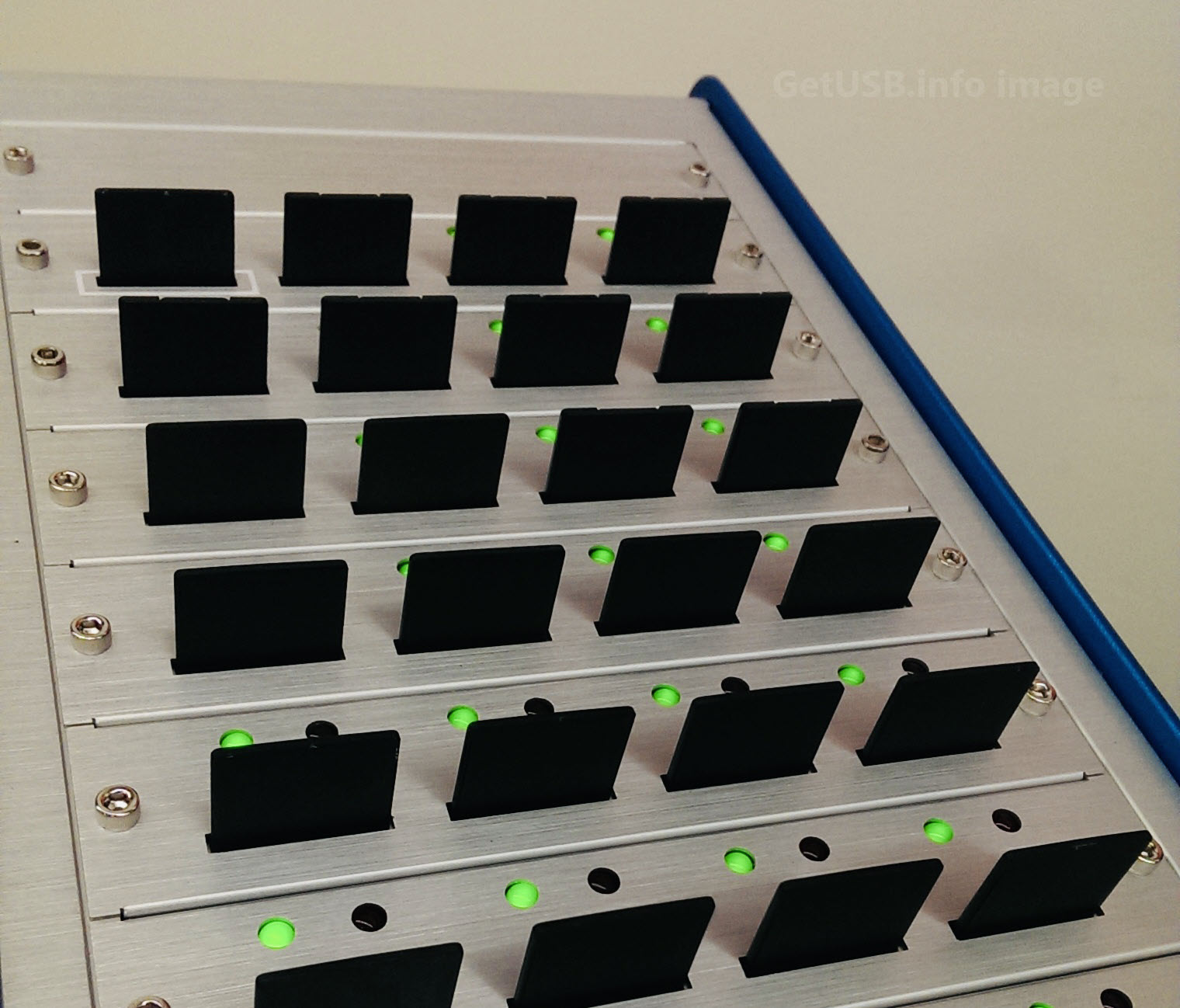
Take the mSD160PC, a PC-based microSD duplicator designed around this exact use case.
At a basic level, it duplicates data across multiple cards. But the more interesting part is what happens beyond that.
Write protection can be applied, effectively locking the content so it cannot be changed in the field. CID (Card Identification) control allows each microSD card to carry a unique identifier. Batch consistency ensures every card in a production run is identical at the data level.
Individually, those features are useful. Together, they create something more meaningful.
Write protection ensures the data remains exactly as intended. CID control allows organizations to track and verify where each card is deployed. And when those two are combined, you start to approach something that looks a lot like compliance.
For a deeper look at microSD duplication workflows and hardware options, you can also reference this overview on microSD duplicators.
It’s not just about copying files—it’s about controlling the lifecycle of the data.
Compliance Is the Real Driver
What ties all of these industries together isn’t a preference for older technology. It’s a requirement for control.
Cloud systems are powerful, but they introduce variables—network dependency, synchronization timing, access control layers that can change over time. In many environments, those variables are unacceptable.
Physical media, when properly managed, removes those unknowns.
If the data cannot be modified, integrity is preserved. If each device is uniquely identified, traceability is possible. If duplication is controlled, consistency is guaranteed.
That combination is what compliance frameworks are built on.
And that’s why microSD cards—simple as they may seem—continue to play a critical role in some of the most demanding environments.
Review Note
This article was developed from real-world observation of how removable media is used in regulated and air-gapped environments across industries such as healthcare, aviation, and defense. The focus on microSD-based workflows reflects practical deployment scenarios where control, traceability, and data integrity are prioritized over convenience.
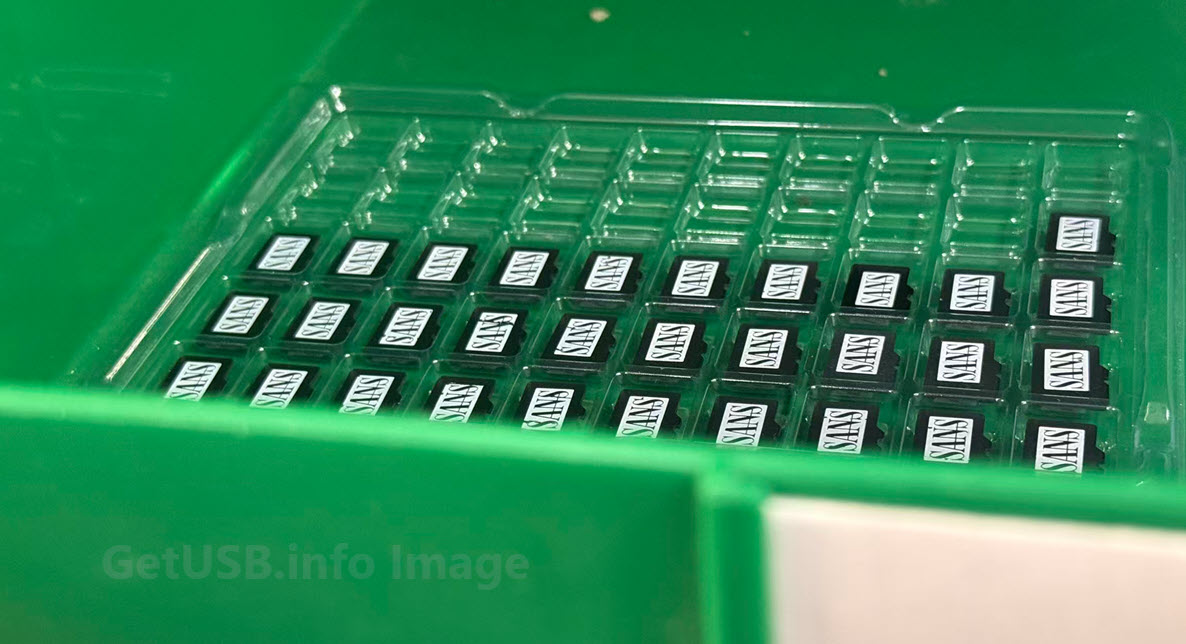
The image used in this article was taken in-house by the author to reflect a real-world example, rather than relying on stock imagery.
Final wording and structure were refined with editorial assistance for clarity and flow. No compensation or sponsorship was received for mentioning any specific products or technologies referenced in this article.
Let GetUSB.info keep you updated.
Receive article notifications about USB storage, flash memory, and duplication updates in your preferred language. We average a couple of articles per week.