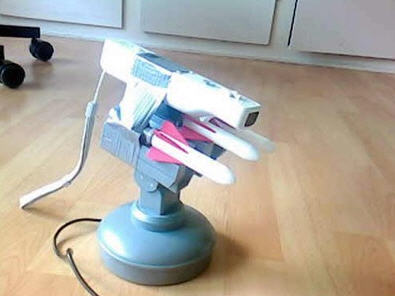
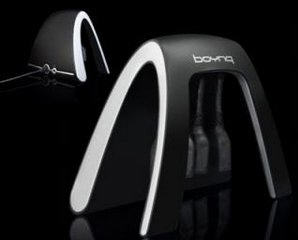
USB Microphone Stylized to The 60s
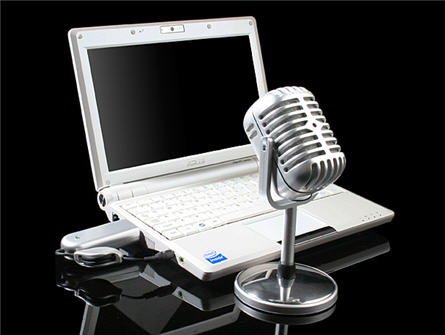


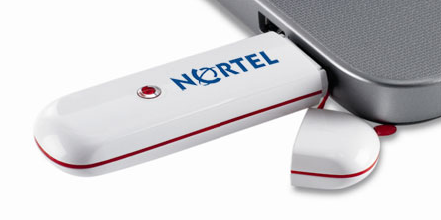
Dr Zafar Chaudry, director of IT for Liverpool Women’s NHS Foundation Trust, said: “Community-based midwives … will be using Nortel Secure Portable Office with hospital-provided laptops, 3G wireless data cards and Nortel Mobile Client Accelerator to securely access, review and update server-based medical records from patient homes.Continue Reading
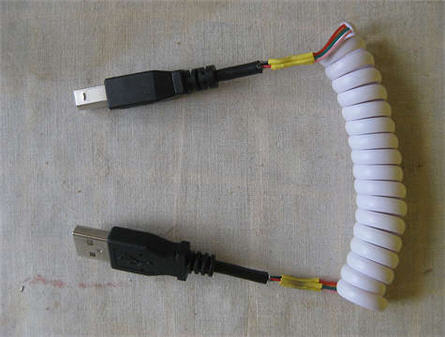
 NEC has long had the best performing USB PCI card with their USB host controller chip (uPD720170) and today they are expanding the portfolio to includes wireless USB. The new wireless USB host controller will allow high speed communication between PCs and peripherals with wireless USB technology such as USB hubs, printers and external storage devices.
The NEC wireless USB host controller received approval from the USB Implementors Forum and uses the WHCI protocol developed by Microsoft, NEC, Philips and Texas Intstruments. The Wireless Host Controller Interface specifications supports data transfer rates of up to 480 megabits per second (Mbps) of data, comparable to wired USB 2.0 connections at close range.
The NEC wireless USB host controller starts at $10 for sample and development use with prices dropping at higher quantities.
Source:Â NEC America.
Continue Reading
NEC has long had the best performing USB PCI card with their USB host controller chip (uPD720170) and today they are expanding the portfolio to includes wireless USB. The new wireless USB host controller will allow high speed communication between PCs and peripherals with wireless USB technology such as USB hubs, printers and external storage devices.
The NEC wireless USB host controller received approval from the USB Implementors Forum and uses the WHCI protocol developed by Microsoft, NEC, Philips and Texas Intstruments. The Wireless Host Controller Interface specifications supports data transfer rates of up to 480 megabits per second (Mbps) of data, comparable to wired USB 2.0 connections at close range.
The NEC wireless USB host controller starts at $10 for sample and development use with prices dropping at higher quantities.
Source:Â NEC America.
Continue Reading
 The Newton’s Cradle USB hub is a fun twist on that traditional office gift of Newton’s Cradle. Rather than stainless steel balls however, this one uses USB connectors to make up a 4 port USB hub.
Albeit a bulky device for a USB hub it would create some interest from the folks around the office. Clearly it would observe the law of conservation of momentum, but none-the-less a great conversation piece….for about 20 seconds.
The Newton’s Cradle USB hub is available from Buy.com but is currently sold out. They are still booking orders.
Source:Â RedFerret.
Continue Reading
The Newton’s Cradle USB hub is a fun twist on that traditional office gift of Newton’s Cradle. Rather than stainless steel balls however, this one uses USB connectors to make up a 4 port USB hub.
Albeit a bulky device for a USB hub it would create some interest from the folks around the office. Clearly it would observe the law of conservation of momentum, but none-the-less a great conversation piece….for about 20 seconds.
The Newton’s Cradle USB hub is available from Buy.com but is currently sold out. They are still booking orders.
Source:Â RedFerret.
Continue Reading
 Do you get the chills while at work but don’t have access to turn down the AC because the boss’ office is over heating from the corner windows? Well, this USB heating shawl will definitely help.
With a quick connection to a USB port, say goodbye to the mid-day chills. Equally effective would be putting the shawl on your legs if the color doesn’t match your outfit [yes I’m talking to the women out there].
The blanket has a button on two ends to loop together so the shawl doesn’t fall off while warming up. I could see this as a great office gift for those getting too cold in the summer months from AC or just too cold in the winter…because…well..it’s winter.
Source: LikeCool.com. USB Heating Blanket only $30.
Continue Reading
Do you get the chills while at work but don’t have access to turn down the AC because the boss’ office is over heating from the corner windows? Well, this USB heating shawl will definitely help.
With a quick connection to a USB port, say goodbye to the mid-day chills. Equally effective would be putting the shawl on your legs if the color doesn’t match your outfit [yes I’m talking to the women out there].
The blanket has a button on two ends to loop together so the shawl doesn’t fall off while warming up. I could see this as a great office gift for those getting too cold in the summer months from AC or just too cold in the winter…because…well..it’s winter.
Source: LikeCool.com. USB Heating Blanket only $30.
Continue Reading

 Intel released a draft specification for USB 3.0 or SuperSpeed USB. The Extensible Host Controller Interface or xHCI provides a standard method for USB 3.0 host controllers to communicate with the USB 34.0 software stacks.
Both AMD and Nvidia voiced complaints earlier in the year that Intel hasn’t released update information to make the new spec an open industry standard and an easy path for transition. Today’s release is Intel’s answer to that request.
Dell, Microsoft and NEC also support the release because the xHCI will expedite the industry transition to next-generation USB 3.0 technology.
Intel released a draft specification for USB 3.0 or SuperSpeed USB. The Extensible Host Controller Interface or xHCI provides a standard method for USB 3.0 host controllers to communicate with the USB 34.0 software stacks.
Both AMD and Nvidia voiced complaints earlier in the year that Intel hasn’t released update information to make the new spec an open industry standard and an easy path for transition. Today’s release is Intel’s answer to that request.
Dell, Microsoft and NEC also support the release because the xHCI will expedite the industry transition to next-generation USB 3.0 technology.
One important factor in adopting SuperSpeed USB products is interoperability between multiple devices from different manufacturers. The xHCI draft specification revision 0.9 aims to make interoperability easier to implement, while also making it easier for developers to create software support for the market.The next revision update is expected at the end of 2008 with revision number xHCI 0.95. So no SuperSpeed USB yet, but the big boys are working their way to it. Source: CRN. Continue Reading

Update: Since the original post, Nexcopy has redesigned their SD card duplicator box. The image from the original post has been updated to reflect the current 20 target SD duplicator model. (Jan 2024)
Nexcopy recently unveiled its industry-leading edge in the market with the all-new SD200PC 20 Target SD Card Duplicator; a 20-target SD Card Duplicator designed for tech-savvy professionals and businesses immersed in Secure Digital media. While duplicating 20 copies of a personal SD card may initially raise eyebrows, Nexcopy is catering to a niche market—specifically targeting companies engaged in distributing software applications on SD cards for field devices or managing large quantities of miniSD cards for fleets of portable electronics.
The SD200PC is compatible with microSD cards, making it a valuable tool for phone companies to efficiently load promotional materials onto phones for their customers. With the increasing power of smartphones and PDAs, coupled with expanding media storage capacities, more individuals and businesses rely on microSD cards for critical data distribution.
With ease-of-use in mind, the SD200PC connects via USB and features 20 numbered SD ports, simplifying the identification of each card. The accompanying software supports FAT, FAT32, exFAT, NTFS, and even proprietary formats an OEM or manufacturer may have developed. This is possible thanks to its bit-by-bit copy engine that makes a perfect digital clone of the master SD card. The duplicator is compatible with Linux distribution packages and caters to complex embedded applications. For less tech-savvy users, Nexcopy provides a user-friendly job wizard within the software to guide them through the duplication process.
Priced at $1,299, the 20 Target SD Card Duplicator offers exceptional value considering its advanced features and immediate availability for delivery. While the investment may seem steep for casual users, it’s a crucial tool for businesses and tech enthusiasts requiring bulk SD card duplication with high reliability.
The Nexcopy SD200PC provides a sophisticated solution for organizations distributing SD card content and tech professionals seeking fast, efficient, and accurate duplication capabilities. With its broad compatibility, user-friendly features, and competitive pricing, the 20 Target SD Card Duplicator stands out as a top choice for managing large volumes of SD and microSD cards effectively.
Nexcopy expanded its line of flash memory duplication equipment with the USB160PC, a 16-target USB duplicator built on USB 3.0 technology back in 2014. This system offers a significant performance boost compared to older USB 2.0 models, such as the SD200PC, which requires approximately six minutes to write 1GB of data. With the USB160PC, that same 1GB data load can be transferred in about one minute, providing IT professionals, content distributors, and production teams with a far more efficient duplication process. The enhanced speed is especially beneficial for environments where large volumes of data or high-capacity drives are used, reducing overall production time and increasing throughput without compromising reliability.
Both the USB160PC and the SD200PC are fully compatible with Windows 11 operating systems. This ensures that regardless of whether users choose the high-speed USB 3.0 duplicator or the widely used 20-target USB 2.0 solution, they can seamlessly operate these systems on modern PCs, maintaining productivity and compatibility with current technology standards.
Nexcopy provides specialized hardware solutions capable of reading the CID (Card Identification) values from Secure Digital (SD) cards—a unique serial number programmed by the card manufacturer that cannot be altered or accessed through standard operating systems. Unlike basic software utilities that interact with the file system, reading a CID value requires low-level communication with the SD card controller, which is not possible with a typical PC card reader. Nexcopy’s proprietary hardware is specifically designed to interface directly with the SD card’s protected registers, extracting this data accurately and reliably. This functionality cannot be achieved with software alone because most consumer-grade card readers do not expose the necessary hardware commands, making dedicated Nexcopy equipment essential for CID reading applications such as security authentication, device whitelisting, and digital rights management solutions.
People want to write a CID value to a Secure Digital (SD) card primarily for security, licensing, and device authentication purposes. The CID (Card Identification) value is a unique, manufacturer-programmed identifier stored in the SD card’s controller. Certain industries and software developers leverage this ID as a hardware-based “fingerprint” to bind applications, encryption keys, or digital content to a specific card.
By writing or customizing the CID value, organizations can:
Because the CID is typically locked at the factory level and not changeable with standard readers, specialized hardware like Nexcopy duplicators is required to program custom CID values, making this an essential capability for businesses that rely on hardware-based security measures.
Source: PRWeb