At first glance, most USB storage devices seem to do the exact same thing. You plug them in, the computer recognizes them, a drive letter appears, and you move files around. From the user side, that is usually the end of the story.
But underneath that simple moment, not every USB device talks to the computer the same way.
Some devices mount and enumerate using BOT, which stands for Bulk-Only Transport. Others, especially performance-focused USB 3.x and USB 3.2 devices, may use UASP, short for USB Attached SCSI Protocol. To most people, those names mean nothing. To IT teams, software developers, and companies qualifying USB media for a workflow, they can matter a great deal.
Think of It as a One-Lane Bridge Versus a Multi-Lane Freeway
A good way to think about the difference is traffic.
BOT is like a one-lane bridge. Traffic still gets across. It is orderly, predictable, and dependable. One instruction goes over, the system waits for that transaction to complete, and then the next one follows. It may not sound exciting, but it works very well. In fact, this is still how most USB flash drives behave today.
UASP is more like a multi-lane freeway. There is more room for traffic to move, more efficiency in how requests are handled, and less waiting around between transactions. On paper, that sounds like the obvious winner.
But here is the point: more lanes only help when there is enough traffic to justify them.
In the USB world, people often assume a newer transport method automatically means a faster and better device. That is not always true. UASP can absolutely improve performance in the right environment, especially when the storage device, controller, and host system are all built to take advantage of it. But many USB flash drives are still limited by the speed of the NAND memory itself. If the flash memory can only write so fast, then adding a wider highway does not suddenly make the cargo move any faster.
Why BOT Still Matters
This is where BOT gets misunderstood.
BOT is not some leftover protocol hanging around because nobody got around to replacing it. BOT is still widely used because it is stable, broadly compatible, and well suited for how standard USB flash drives are actually deployed. For many use cases, that matters more than chasing the highest possible benchmark number.
A flash drive used for software distribution, content delivery, duplication, boot media, managed deployments, or day-to-day file transfer often benefits more from predictable behavior than from shaving a few seconds off a transfer that is already limited somewhere else. The host may be ready for freeway traffic, but the cargo is still being loaded at the same pace.
That is why BOT remains the most stable and practical choice for much of the USB flash market. It is simple, well understood, and consistent across a wide range of systems and applications.
A Real-World Example of Why This Matters
Consider a company that has been using one type of USB flash drive for years. Their workflow is stable. Their software recognizes the device the way it always has. Their users know what to expect. Then a newer batch of USB media starts showing up with different behavior under the hood. The device still mounts. The files are still there. But now the host system sees the product through a different transport path, and that small change is enough to raise concerns.
Nothing appears broken at first glance, yet something feels different. For organizations that depend on consistency, that is enough to trigger evaluation.
In situations like that, the conversation quickly shifts away from raw speed and toward repeatability. The buyer is no longer asking, “Which one is theoretically faster?” The buyer is asking, “Which one will behave the same way every time, across every batch, on every system we care about?”
That is where a stability-first BOT device can become the preferred option. The one-lane bridge may not look as glamorous as the freeway, but if it gets the load across every single time, that reliability starts to matter more than the extra lanes.
Speed Is Not the Only Metric
A lot of USB 3.2 products are built with speed as the headline feature, and that is where UASP shows up more often. It makes sense in external SSD products and other high-throughput storage where the controller and media can take advantage of the extra efficiency.
But not every USB storage product is trying to win a speed contest.
In many flash drive applications, the NAND itself becomes the practical bottleneck. If the memory cannot sustain a higher write rate, then the transport protocol is no longer the main factor. At that point, the value of UASP may exist on paper more than it does in the user experience.
That is why two USB devices can both be sold as modern USB 3.x products and still behave differently once connected. One may enumerate through a traditional BOT path, while another comes in using UASP. From the outside, both look like removable storage. Underneath, the conversation with the host is different.

Why Consistent Media Behavior Has Value
For organizations that want repeatable USB behavior across purchasing cycles, it often makes sense to look beyond whatever happens to be available in retail channels and instead evaluate controlled USB flash media designed for stable supply, known components, and predictable device presentation.
That is not about making one protocol sound modern and the other sound old. It is about understanding the job at hand. If the goal is maximum throughput from fast storage, UASP may be the right fit. If the goal is dependable operation, wide compatibility, and consistency from one production run to the next, BOT still makes a lot of sense.
Put simply, the better question is not which protocol sounds newer, but which behavior best matches the application.
Bottom Line
BOT and UASP both exist because they solve different problems.
BOT remains common because it is stable, straightforward, and dependable. UASP earns its place when the storage hardware and host system can truly benefit from a more efficient transport path. Neither one should be judged in isolation.
Once you look past the labels, the decision becomes easier to understand. Sometimes the multi-lane freeway is exactly what you want. Sometimes the one-lane bridge is the smarter choice because it delivers the same result with fewer surprises.
If you want a broader primer on how USB storage devices identify themselves to a host system, see our article on USB mass storage device protocol.
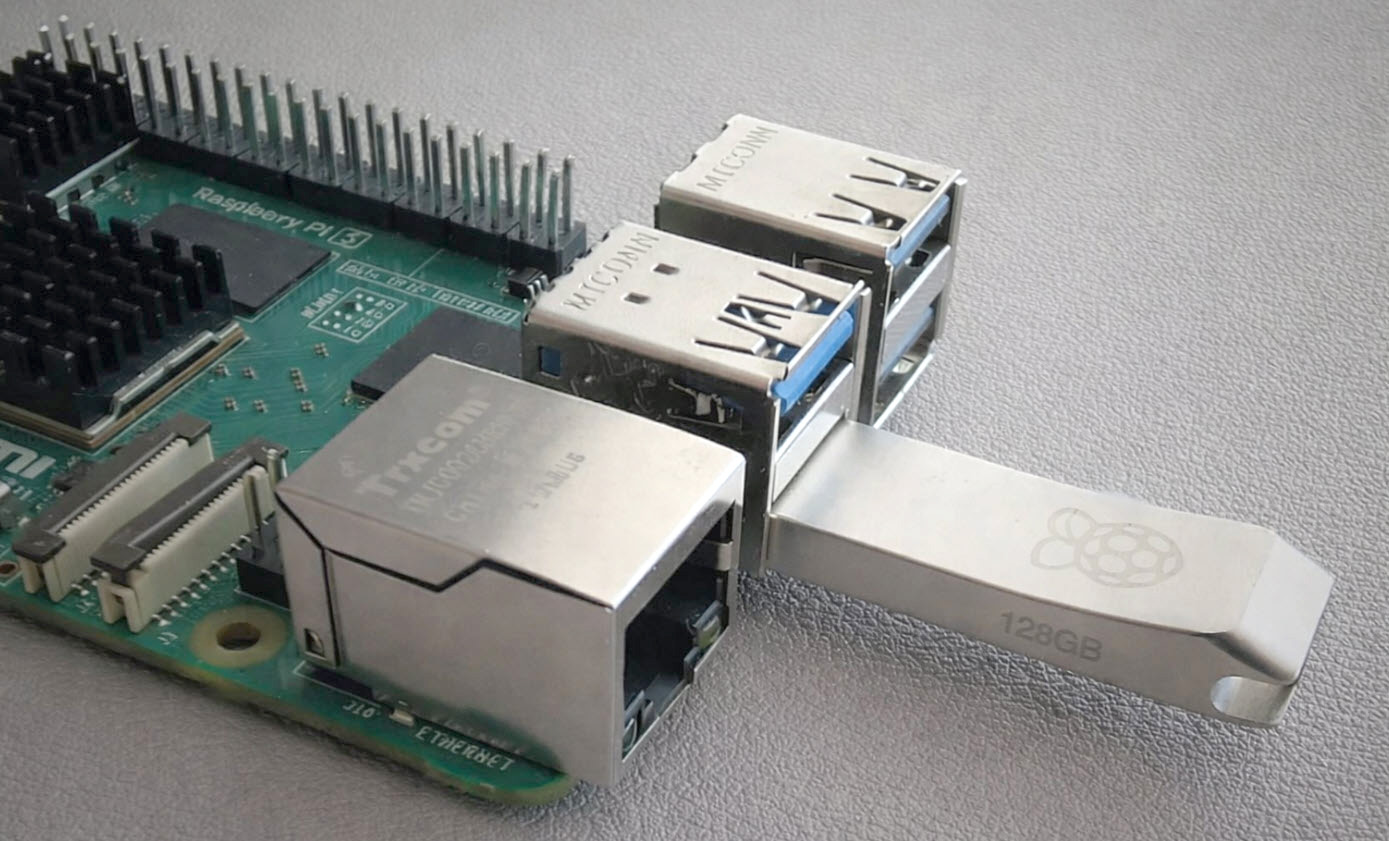
How this article was created: This article was prepared with AI assistance for drafting and visual support, then reviewed and refined by the site publisher. The concepts, examples, and editorial direction were developed by the publisher. One image is based on a real-world original photo, while the comparison graphic was created with AI to visually explain the difference discussed in the article.
Let GetUSB.info keep you updated.
Receive article notifications about USB storage, flash memory, and duplication updates in your preferred language. We average a couple of articles per week.