Despite every effort for the world to go paperless, there is always one more idea or product to use it. Today we hear about IntelliPaper USB drives. This is a new technology where the parent company, IntelliPaper, is trying to raise funds for it’s manufacturing.
The idea is putting a controller chip embedded between several pieces of paper. From there, USB contacts are created to transmit the electical current of the four pins required to make USB work.
Granted, this wont be an 8GB flash drive, but you can autorun a website, store some basic information or embed music for an audible greeting card.
The ideas do seem limitless when you watch the video off the start-up webpage at Indiegogo.
Continue Reading
Slim is in…hasn’t that been the motto of runway models for the past 20 years. I guess you can say the same for tech gadgets, laptops and of course storage peripherals.
LaCie introduces the Porsche Designed ultra slim 120GB SSD hard drive.
The $149.99 Slim Drive P9223 by LaCie, powered by none other than USB 3.0, follows the same minimalist design set by Porsche Design. It has a thickness of a mere 11mm; this makes it a great compliment to a 17mm slim MacBook. It’s chassis is made of solid aluminum which doubles as a heat sink for fast dissipation of any heat build up from the NAND chips.
The LaCie Porsche SSD can top a transfer speed of 400/MBs. But it’s not a walk in the park to get that data transfer rate. You need to have a computer which supports the USB Attached SCSI [UAS] protocol. This is a protocol which overcomes the aging bulk-only transport method which has been around since USB 1.0.
Source:Â EverythingUSB.
Continue Reading
Apple has added Lightning to micro USB port support to its online store. The new Lightning to micro USB adapter is compatible with the newest iPhone, iPad, and iPod Touch device. The product can be used to sync as well as charge each type of device.
The move shows Apple’s willingness to extend its new adapters capabilities. In the past, a 30-pin dock connector to micro USB adapter was only available for sale in Europe. The new adapter, while listed in the United States, is also shown with EU specifications.
Apple had refused a micro USB adapter on its 30-pin connector because it wanted to stick with proprietary options that would protect its devices from third party device adapters. The move in the EU, however, allowed for less waste since old adapters from legacy devices could be adapted
Apple also chose to forgo micro USB adapters because they didn’t allow the company to make iOS devices as thin and light as they wanted.
Micro USB adapters are not as fast as Apple’s Lightning connectors; however, they are also not a standard type of connection option like 30-pin connectors had become over five years of iPhone, iPad, and iPod Touch sales.
Apple sells an adapter to convert from Lighting to 30-pin so that most legacy accessories can still function, but some devices have become unavoidably incompatible with the newest iOS devices because of the Lightning connector. In some cases, users have become angered when video capabilities would not operate with the company’s lightning to 30-pin connector adapter.
Other adapters already offered by Apple include options for SD card readers, VGA connectors, Lightning to HDMI, Firewire, and eSATA.
The new micro USB adapter comes at a cost of $19.
Continue Reading
Nexcopy has released a USB Copy Protection solution for those who need to share files, but without giving the “receiver” full ability to copy and re-distribute.
The great thing about a USB flash drive is file sharing. They are great for copying, saving, and taking files on the road. This same convenience factor also makes it very difficult to have Digital Rights Management as well. With Nexcopy’s USB Copy Protection, it’s not difficult any longer!
How USB Copy Protection Works
First, let’s explain the difference between write protection and USB copy protection. Some think it’s the same, but it’s not.
USB write protection (also called data lock) means the files cannot be deleted off the drive… it also means files cannot be added to the drive. But you can still copy the files off the drive to your desktop or hard drive.
USB copy protection provides the same functionality as write protection, but in addition, does not allow the files to be copied off the drive. This means even the most honest person couldn’t save a file to their desktop or hard drive.
So what type of customer would be looking for USB copy protection? Think of a college lesson plan where the administration doesn’t want the lesson going out for free. Or how about artists with very large, high-resolution photos they don’t want a customer to print unlimited numbers? Or an oil company with confidential information that should not be uploaded to the internet or sent to competitors… these are examples of companies who could use USB copy protection.
The Nexcopy solution restricts the ability to print a file. You cannot share, copy, or paste the files from the USB stick to the desktop or hard drive. You can set passwords to further control the content, and of course, none of these files can be deleted off the drive.
*We’ve seen some solutions where they claim copy protection, but they are just encrypted files… format the drive and everything is gone. Well, that’s not good… if it’s important enough to copy protect, then it shouldn’t be deletable either.
Several other key factors about the Nexcopy USB Copy Protection:
PC and Mac compatible (Windows XP+ and macOS 10.6+)
No Admin rights required on the user’s computer
No software installed on the host machine
No internet connection required
Standalone solution (hardware + software)
Nexcopy doesn’t support every file known to man, but they do cover the big ones:
Documents: PDF, TXT, HTML, CSS
Images: JPEG, GIF, PNG
Audio: MP3, WAV
Video: WMV, MOV
Visit Nexcopy’s site for pricing and additional details.
It’s happened. The darkest fears of humanity realized. Earth has been conquered by an ancient alien race. The Reapers. And the name ain’t a coincidence…
Mass Effect 3 is one of the coolest interactive video games out there. With a unique ‘choose-your-own-adventure’ narrative structure and mind-bending graphics and battle scenarios, Mass Effect 3 is pushing gaming forward. This ain’t no Donkey Kong! (no offense Donkey Kong)
Source:Â Mimobot.
Continue Reading
Biolite Stove is portable camping stove which converts boiling water into energy to charge your portable devices. I like the symmetry already!
The Biolite Stove is no bigger then a large jug of water. It can hold up to 1 liter of water and can boil that same amount of water in [about] 4.5 minutes.
The fire power, as they say, ranges between 3.4kw and 5.5kw and will charge at a continuous flow 2W @ 5volts or peak of 4W @ 5volts. Peak power flow depends on the BTUs of the fire while it’s going…you know, the hottest the fire will get, the most energy it will create as the water is boiling at the highest rate.
The Biolite Stove will charge anything via USB. As to the efficiency of that charging process, nothing to say it’s fast or slow, but conceptually
Continue Reading
What is it about USB steampunk flash drives? Am I the only one with a keen interest in showing off these hand crafted USB drives? Could it be the material used which draws my attention? Could it be the fine detail of each device which peaks my interested? Could it be the impressive number of hours required to make each piece? I’m not sure, but I could flip through pages and pages of these USB steampunk drives.
For 2012, here are the top 12 styles. There is not particular order as each person will favor their own, but you will agree these are probably the 12 most unique designs you’ve seen the past twelve months.
Continue Reading
If you look up ambiguous in the dictionary [or wiki page] you’ll probably find a picture of a USB flash drive. After all, aren’t they? Not with standing, Zana Design has put craft, materials and resource to the limit with their Apophis meteorite flash drive.
Of course, just being made with a meteorite seems like enough, but no, it also comes with a high-purity diamond embedded in it. The drive also incorporates African Black Wood, which is considered a rather high quality material.
As far as the actual thumb drive is concerned, it’s USB 3.0-compatible, and comes with 64GB of internal memory. It also has a lifetime warranty, so at least you know if anything goes wrong with your ultra-expensive drive, you will be able to get it replaced.
The device comes in two different flavors. Both have the diamond and meteorite, but the cheaper version also features silver and will set you back $1,130. The more expensive 18C gold model will set you back $1,990.
My buddy made the comment:Â
Continue Reading
Brando is reselling [because they don’t actually make anything] a 5 socket USB power brick. The power block will supply a total of 11,000 mAh of Output, with not much of any port having significant Watts.
It is probably a good product for a trickle charge to several devices or a quick charge to one or two, so if you’re far away from that car charger, wall charger, or solar charger the USB power brick would be a nice edition.
The USB power brick sells for $60 USD + shipping of a couple dollars
Continue Reading
I read a great article on The Unofficial Apple Weblog [TUAW] about making a Mountain Lion installer on USB.
To make an installer version of Mountain Lion on USB you’ll obviously need a copy of the OSX Mountain Lion installer.
Next, go to your applications folder and find the actual installer…should be called Mac OS X Mount Lion.
Rich click that bad boy and select the Show Package Contents form the pop-up.
Navigate to Contents > SharedSupport and then start looking for the InstallESD.dmg. This is the image file for the installer.
Now we need to launch the DiskUtility so open a new folder with Command N.
Continue Reading
The USB-IF released the Power Delivery [PD] specification for USB 3.0. In addition, the 2.0 forum approved it too.
Because we are talking about 100watts over USB there is some risk associated with introducing such a spec. The USB-IF said the power can be sent, both ways, intelligently where power ramps up or down upon delivery. The spec includes an intelligent check of both the cable and the other end’s capability to insure nothing goes up in flames.
If you stop and think about this, if a typical laptop has three USB sockets, what kind of power brick would you need to power the laptop plus 300watts of power, assuming all sockets are requesting a full load. Maybe the power brick will end up being bigger and heavier then the laptop {grin}.
For a very interesting read on the entire PD report,
Continue Reading
Flash drives are getting cheaper and flashdrives are getting bigger. You get to a point and ask yourself, should I archive my valuable information on a large flashdrive or a USB hard drive? For example, lets say you have 10GBs of photos from your phone or camera and you are looking to archive those pictures. Should you do this to a flash drive or a hard drive?
The easiest and most convenient decision would be saving your files to the flash drive. Most everyone has a 16GB USB flashdrive these days, it fits in your hand and you can carry it around with out trouble. But will it last? Is a USB flashdrive where I should put my photos if my computer crashes and I need to restore my photos? Lets forget about the possibility you simply misplace the USB flashdrive. Is the device archive worthy?
The other option is the USB hard drive. Most people don’t have one so you’ll need to buy one. Although they are cheap, a USB hard drive is not as cheap as a 16GB or 32GB flash drive…and to be honest the 16-32GB sticks probably have enough space that it could hold your photos. So is it worth the extra time and money to archive to a USB hard drive? I guess this is the question more and more people are asking themselves. Well I have the definitive answer:
USB hard drive.
Flashdrives are great products for quickly moving files from one computer to another. However, they are not the best choice for archive purposes, and here are some reasons why:
The devices are small and will most likely get damaged. Unless of course you put the USB stick into the back of your desk drawer, a USB flashdrive gets banged around a lot and this abuse lends itself to failed cells in the memory. Meaning, over time the files will get corrupted because the NAND memory gets damaged.
Continue Reading

 The idea is putting a controller chip embedded between several pieces of paper. From there, USB contacts are created to transmit the electical current of the four pins required to make USB work.
Granted, this wont be an 8GB flash drive, but you can autorun a website, store some basic information or embed music for an audible greeting card.
The ideas do seem limitless when you watch the video off the start-up webpage at Indiegogo.
Continue Reading
The idea is putting a controller chip embedded between several pieces of paper. From there, USB contacts are created to transmit the electical current of the four pins required to make USB work.
Granted, this wont be an 8GB flash drive, but you can autorun a website, store some basic information or embed music for an audible greeting card.
The ideas do seem limitless when you watch the video off the start-up webpage at Indiegogo.
Continue Reading
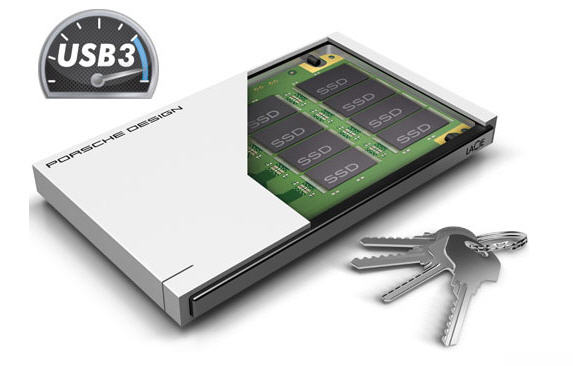 The $149.99 Slim Drive P9223 by LaCie, powered by none other than USB 3.0, follows the same minimalist design set by Porsche Design. It has a thickness of a mere 11mm; this makes it a great compliment to a 17mm slim MacBook. It’s chassis is made of solid aluminum which doubles as a heat sink for fast dissipation of any heat build up from the NAND chips.
The LaCie Porsche SSD can top a transfer speed of 400/MBs. But it’s not a walk in the park to get that data transfer rate. You need to have a computer which supports the USB Attached SCSI [UAS] protocol. This is a protocol which overcomes the aging bulk-only transport method which has been around since USB 1.0.
The $149.99 Slim Drive P9223 by LaCie, powered by none other than USB 3.0, follows the same minimalist design set by Porsche Design. It has a thickness of a mere 11mm; this makes it a great compliment to a 17mm slim MacBook. It’s chassis is made of solid aluminum which doubles as a heat sink for fast dissipation of any heat build up from the NAND chips.
The LaCie Porsche SSD can top a transfer speed of 400/MBs. But it’s not a walk in the park to get that data transfer rate. You need to have a computer which supports the USB Attached SCSI [UAS] protocol. This is a protocol which overcomes the aging bulk-only transport method which has been around since USB 1.0.
 Source:Â
  Other adapters already offered by Apple include options for SD card readers, VGA connectors, Lightning to HDMI, Firewire, and eSATA.
The new micro USB adapter comes at a cost of $19.
Other adapters already offered by Apple include options for SD card readers, VGA connectors, Lightning to HDMI, Firewire, and eSATA.
The new micro USB adapter comes at a cost of $19.

 Source:Â
Source:  The fire power, as they say, ranges between 3.4kw and 5.5kw and will charge at a continuous flow 2W @ 5volts or peak of 4W @ 5volts. Peak power flow depends on the BTUs of the fire while it’s going…you know, the hottest the fire will get, the most energy it will create as the water is boiling at the highest rate.
The Biolite Stove will charge anything via USB. As to the efficiency of that charging process, nothing to say it’s fast or slow, but conceptually
The fire power, as they say, ranges between 3.4kw and 5.5kw and will charge at a continuous flow 2W @ 5volts or peak of 4W @ 5volts. Peak power flow depends on the BTUs of the fire while it’s going…you know, the hottest the fire will get, the most energy it will create as the water is boiling at the highest rate.
The Biolite Stove will charge anything via USB. As to the efficiency of that charging process, nothing to say it’s fast or slow, but conceptually


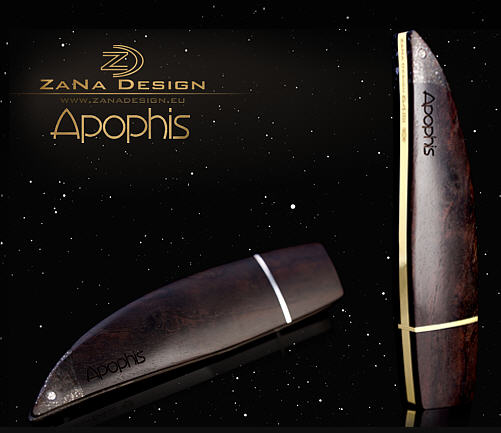 Of course, just being made with a meteorite seems like enough, but no, it also comes with a high-purity diamond embedded in it. The drive also incorporates African Black Wood, which is considered a rather high quality material.
As far as the actual thumb drive is concerned, it’s USB 3.0-compatible, and comes with 64GB of internal memory. It also has a lifetime warranty, so at least you know if anything goes wrong with your ultra-expensive drive, you will be able to get it replaced.
The device comes in two different flavors. Both have the diamond and meteorite, but the cheaper version also features silver and will set you back $1,130. The more expensive 18C gold model will set you back $1,990.
My buddy made the comment:Â
Of course, just being made with a meteorite seems like enough, but no, it also comes with a high-purity diamond embedded in it. The drive also incorporates African Black Wood, which is considered a rather high quality material.
As far as the actual thumb drive is concerned, it’s USB 3.0-compatible, and comes with 64GB of internal memory. It also has a lifetime warranty, so at least you know if anything goes wrong with your ultra-expensive drive, you will be able to get it replaced.
The device comes in two different flavors. Both have the diamond and meteorite, but the cheaper version also features silver and will set you back $1,130. The more expensive 18C gold model will set you back $1,990.
My buddy made the comment:Â
 The
The  Rich click that bad boy and select the Show Package Contents form the pop-up.
Navigate to Contents > SharedSupport and then start looking for the InstallESD.dmg. This is the image file for the installer.
Now we need to launch the DiskUtility so open a new folder with Command N.
Rich click that bad boy and select the Show Package Contents form the pop-up.
Navigate to Contents > SharedSupport and then start looking for the InstallESD.dmg. This is the image file for the installer.
Now we need to launch the DiskUtility so open a new folder with Command N.
 If you stop and think about this, if a typical laptop has three USB sockets, what kind of power brick would you need to power the laptop plus 300watts of power, assuming all sockets are requesting a full load. Maybe the power brick will end up being bigger and heavier then the laptop {grin}.
For a very interesting read on the entire PD report,
If you stop and think about this, if a typical laptop has three USB sockets, what kind of power brick would you need to power the laptop plus 300watts of power, assuming all sockets are requesting a full load. Maybe the power brick will end up being bigger and heavier then the laptop {grin}.
For a very interesting read on the entire PD report,
 The easiest and most convenient decision would be saving your files to the flash drive. Most everyone has a 16GB USB flashdrive these days, it fits in your hand and you can carry it around with out trouble. But will it last? Is a USB flashdrive where I should put my photos if my computer crashes and I need to restore my photos? Lets forget about the possibility you simply misplace the USB flashdrive. Is the device archive worthy?
The other option is the USB hard drive. Most people don’t have one so you’ll need to buy one. Although they are cheap, a USB hard drive is not as cheap as a 16GB or 32GB flash drive…and to be honest the 16-32GB sticks probably have enough space that it could hold your photos. So is it worth the extra time and money to archive to a USB hard drive? I guess this is the question more and more people are asking themselves. Well I have the definitive answer:
USB hard drive.
Flashdrives are great products for quickly moving files from one computer to another. However, they are not the best choice for archive purposes, and here are some reasons why:
The devices are small and will most likely get damaged. Unless of course you put the USB stick into the back of your desk drawer, a USB
The easiest and most convenient decision would be saving your files to the flash drive. Most everyone has a 16GB USB flashdrive these days, it fits in your hand and you can carry it around with out trouble. But will it last? Is a USB flashdrive where I should put my photos if my computer crashes and I need to restore my photos? Lets forget about the possibility you simply misplace the USB flashdrive. Is the device archive worthy?
The other option is the USB hard drive. Most people don’t have one so you’ll need to buy one. Although they are cheap, a USB hard drive is not as cheap as a 16GB or 32GB flash drive…and to be honest the 16-32GB sticks probably have enough space that it could hold your photos. So is it worth the extra time and money to archive to a USB hard drive? I guess this is the question more and more people are asking themselves. Well I have the definitive answer:
USB hard drive.
Flashdrives are great products for quickly moving files from one computer to another. However, they are not the best choice for archive purposes, and here are some reasons why:
The devices are small and will most likely get damaged. Unless of course you put the USB stick into the back of your desk drawer, a USB