
Why “Active Ingredients” Matter (and How to Spot When They Don’t Exist)
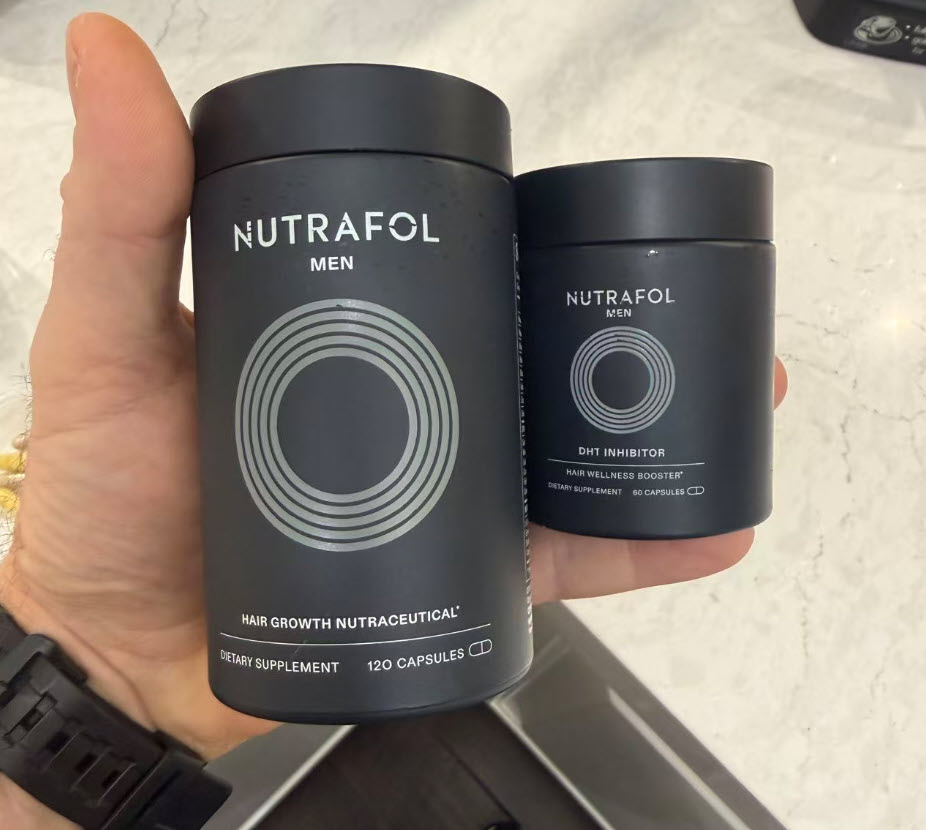
Does Nutrafol Work?
This article is not written to criticize Nutrafol as a company, nor to tell anyone what they should or should not buy. It is written from the perspective of a consumer who used Nutrafol Men alongside the Nutrafol Men DHT Inhibitor consistently for over one year, at a combined cost of roughly $120 per month, and did not experience any measurable or meaningful improvement in hair density, regrowth, or reduced thinning.
When a product requires long-term use and a significant financial commitment, it is reasonable to ask what the active mechanism actually is — and whether the expected outcome aligns with how the product works biologically. That question matters in any industry, whether the product is software, hardware, or a health-related supplement.
At GetUSB.info, our approach is not new. Our work has always focused on explaining how technology actually functions beneath the surface — whether that is USB flash drive controllers, NAND memory behavior, data verification, or professional duplication systems. We routinely separate marketing claims from measurable behavior and documented mechanisms. Applying that same standard of evaluation to an off-topic consumer product may seem unusual, but the underlying principle is identical: if the active mechanism is unclear or indirect, expectations should be adjusted accordingly.
Nutrafol products are marketed as “nutraceuticals,” meaning they are dietary supplements rather than pharmaceutical treatments. As supplements, they are not required to demonstrate clinical effectiveness in the way prescription medications are. Instead, they are positioned as supporting hair health indirectly through nutrition, stress modulation, and general wellness pathways. This distinction is important, because indirect support is not the same as addressing the primary biological cause of most male hair loss.
For the majority of men, thinning at the crown, temples, hairline, or neck is driven by dihydrotestosterone (DHT) acting on genetically sensitive hair follicles. Over time, these follicles miniaturize until hair growth becomes thinner, shorter, and eventually stops. Any product that does not meaningfully reduce DHT at the follicle level should not be expected to stop or reverse this process, regardless of how polished the branding or how comprehensive the ingredient list appears.
Both Nutrafol Men and the Nutrafol Men DHT Inhibitor rely on proprietary blends made up of vitamins, minerals, botanical extracts, and stress-related adaptogens. While these ingredients may contribute to overall hair quality or scalp condition, they are fundamentally supportive, not corrective.
- Typical ingredient categories used in Nutrafol products include: Biotin and other B vitamins, which only improve hair growth if a deficiency exists (most adults are not deficient)
- Zinc, selenium, and antioxidant vitamins
- Ashwagandha and similar adaptogens aimed at cortisol and stress response
- Saw palmetto, described as a natural DHT inhibitor, but shown to have weak and inconsistent effects
- Collagen or keratin-support compounds that affect hair structure, not follicle survival
The “DHT inhibitor” labeling deserves special attention. While saw palmetto is often marketed as a DHT-blocking alternative, its effect is mild, variable between individuals, and not reliably delivered at therapeutic levels to scalp or neck follicles. This is not equivalent to prescription DHT blockers, and the difference is biological, not semantic. In practice, this means that even long-term, consistent use may not meaningfully change the trajectory of genetically driven hair loss.
In contrast, Rogaine (minoxidil) represents one of the few over-the-counter hair-loss treatments with decades of clinical research supporting its effectiveness. Minoxidil does not block DHT, but it is proven to extend the hair growth phase (anagen), improve follicle size, and slow visible thinning when used consistently. While it does not regrow hair on fully dormant follicles, it can meaningfully preserve and thicken existing hair.
Importantly, Rogaine’s mechanism is clearly defined, its limitations are well documented, and its results are measurable over time. That transparency is what distinguishes an active treatment from a general support product.
In some cases, users may perceive improvement from supplements for reasons unrelated to follicle regrowth. Hair cycles naturally fluctuate, stress levels change, and improved nutrition can temporarily thicken existing hair strands without increasing hair count. These effects can be real, but they should not be confused with stopping follicle miniaturization.
- Reasons supplements like Nutrafol can appear to “work” without changing outcomes include: Natural shedding and regrowth cycles coinciding with product use
- Reduced stress improving the appearance of existing hair
- Better scalp condition leading to healthier-looking strands
- Placebo effect combined with long growth timelines (3–6 months or longer)
None of these mechanisms address the root cause of male-pattern hair loss, which is why expectations should be set carefully — especially when the financial commitment is significant.
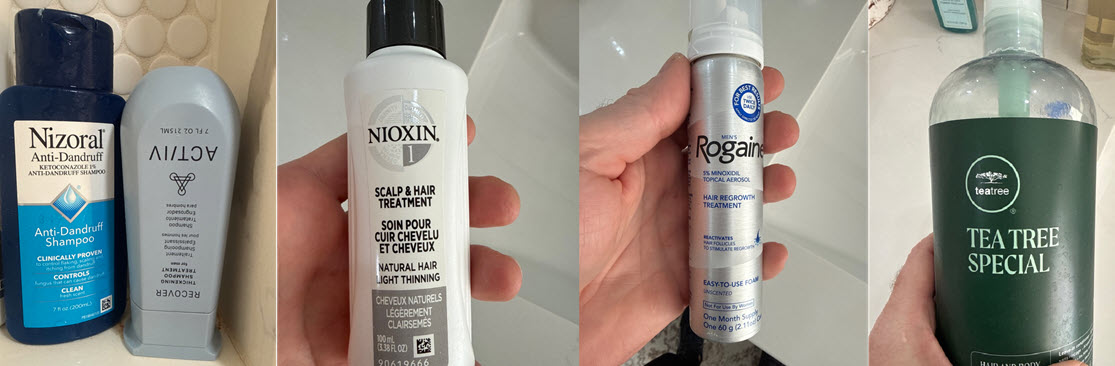
After discontinuing Nutrafol, a more practical routine was adopted: Rogaine (minoxidil), Nizoral A-D (ketoconazole) shampoo, occasional microneedling, and Nioxin scalp and hair treatment. These approaches focus on scalp health, follicle stimulation, and preserving existing hair rather than relying on supplementation alone.
The final takeaway is straightforward. For men experiencing true pattern hair loss, only prescription DHT blockers prescribed by a physician have consistently demonstrated the ability to slow or halt progression at the hormonal level. Over-the-counter treatments like Rogaine can meaningfully help, but supplements should be viewed as secondary support — not primary solutions — especially when the cost is high and outcomes are uncertain.
Thinking twice before committing long-term money to products without clearly defined active mechanisms is not cynicism. It is informed decision-making.
Tags: active ingredients, consumer skepticism, product effectiveness, supplement marketing, technology evaluation
