
When A Company Disapperas, Where Does Your Data Go?
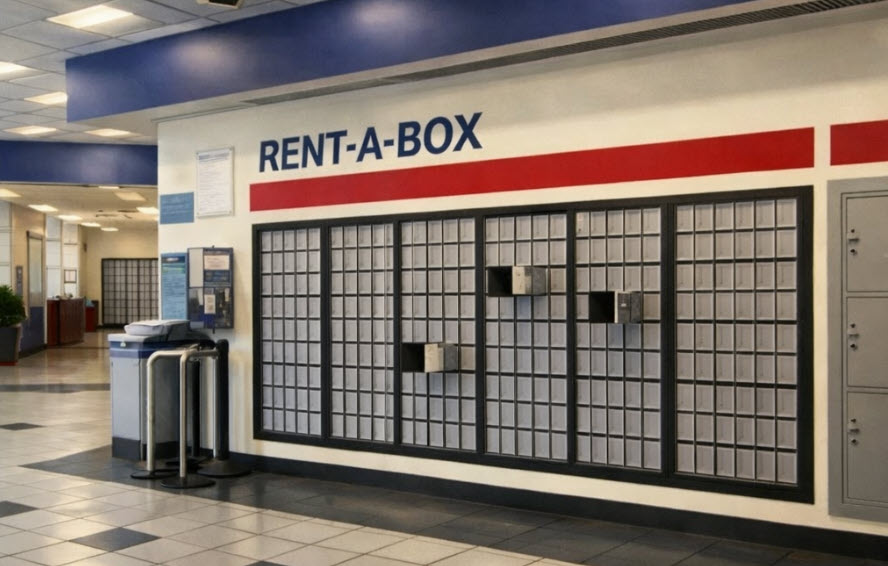
Sometimes your data doesn’t “get deleted” — you just lose the door used for reaching it.
Imagine you’ve rented a PO box for years. Important mail goes there. Contracts. Receipts. Records you don’t need every day, but absolutely rely on when they matter. You pay the fee. You follow the rules. Everything works as expected.
Then one day, the mail stops. Not because nothing was sent — but because the post office location quietly closed. No notice. No forwarding. No explanation. The box still exists somewhere, but you have no way to reach it. You don’t know if your mail was returned, destroyed, or is sitting untouched in a locked room.
Nothing dramatic happened. It just ended. That’s what a silent company shutdown can feel like in the digital world.
What usually happens when a company shuts down
To be clear, most business closures don’t end in a quiet lockout. In practice, one of three things tends to happen.
1) The company is acquired. Systems continue under new ownership. Your account still works. Your data remains accessible, even if the service changes direction.
2) The company runs an orderly shutdown. Users are notified. There’s a clear export window. The company either provides a migration path or makes it clear what gets deleted and when.
3) The company simply disappears. No acquisition. No warning. No export path. The service just goes away.
The scenario nobody plans for
That third outcome isn’t the most common, but it’s the one that hits hardest because it feels so unfair. There’s no “we’re closing” email. No countdown timer. No final reminder to download your files.
The login page may work one day and fail the next. Support links break. Domains expire. Eventually, even cached pages vanish. From the user’s perspective, nothing failed technically. There was no outage. No breach. No obvious mistake.
The business just stopped existing. And with it, your access stopped too.
The real loss isn’t the data
Here’s the part that matters: in many cases, your data may not “vanish” immediately. It could still exist on servers, backups, or archived systems. But without access, that detail becomes academic.
What you lose isn’t just information. You lose agency.
- You didn’t delete it.
- You didn’t consent to its removal.
- You can’t retrieve it.
- You can’t even confirm what happened to it.
Just like mail locked inside a closed PO box, the contents may still be somewhere. But without a key, a clerk, or a process, “somewhere” might as well be nowhere.
This isn’t about the cloud failing
This isn’t a story about bad technology. Cloud platforms can be reliable, redundant, and well-designed. The problem in a silent shutdown isn’t the infrastructure — it’s the dependency.
When access to your information depends entirely on the continued existence of a company, your data’s lifespan is tied to decisions you’ll never see: funding, acquisitions that didn’t happen, or a leadership call made in a boardroom on a Tuesday morning. We’ve written before about how information can effectively disappear even when it still exists, simply because the path back to it is gone, as with losing a phone that holds critical contact information.
The system works exactly as designed. Until the business behind it doesn’t.
Observation from the field
In real-world workflows, people rarely lose data because they made a dumb mistake. More often, they lose it because the “easy” system they trusted didn’t provide a clean exit. The quiet failures are the worst ones, because there’s no clear moment to react. You notice it after the fact, when you need the record and it’s gone.
Two simple takeaways
If you remember nothing else, remember this:
- Convenience is not ownership. A service can be great and still vanish on a timeline you don’t control.
- Access is the real asset. When access disappears, the difference between “stored” and “reachable” becomes painfully clear.
If you want a technical baseline for what “cloud service” actually means (and why access is central to it), NIST’s definition is a solid, plain-English reference. It’s not marketing. It’s a standards body describing how the model works. The NIST Definition of Cloud Computing (SP 800-145).
And if you’re curious how Google frames “helpful content” and transparency (including what matters most to readers), their Search Central guidance is worth skimming. Creating helpful, reliable, people-first content.
Matt LeBoff
USB Storage Systems & Duplication Specialist
How this article was created
This article was drafted with AI assistance for outlining and phrasing, then reviewed, edited, and finalized by a human author to improve clarity, accuracy, and real-world relevance.
Image disclosure
The image at the top of this article was generated using artificial intelligence for illustrative purposes. It is not a photograph of a real post office location or event.
Tags: cloud shutdown, data access, data ownership, digital records, tech reliability
