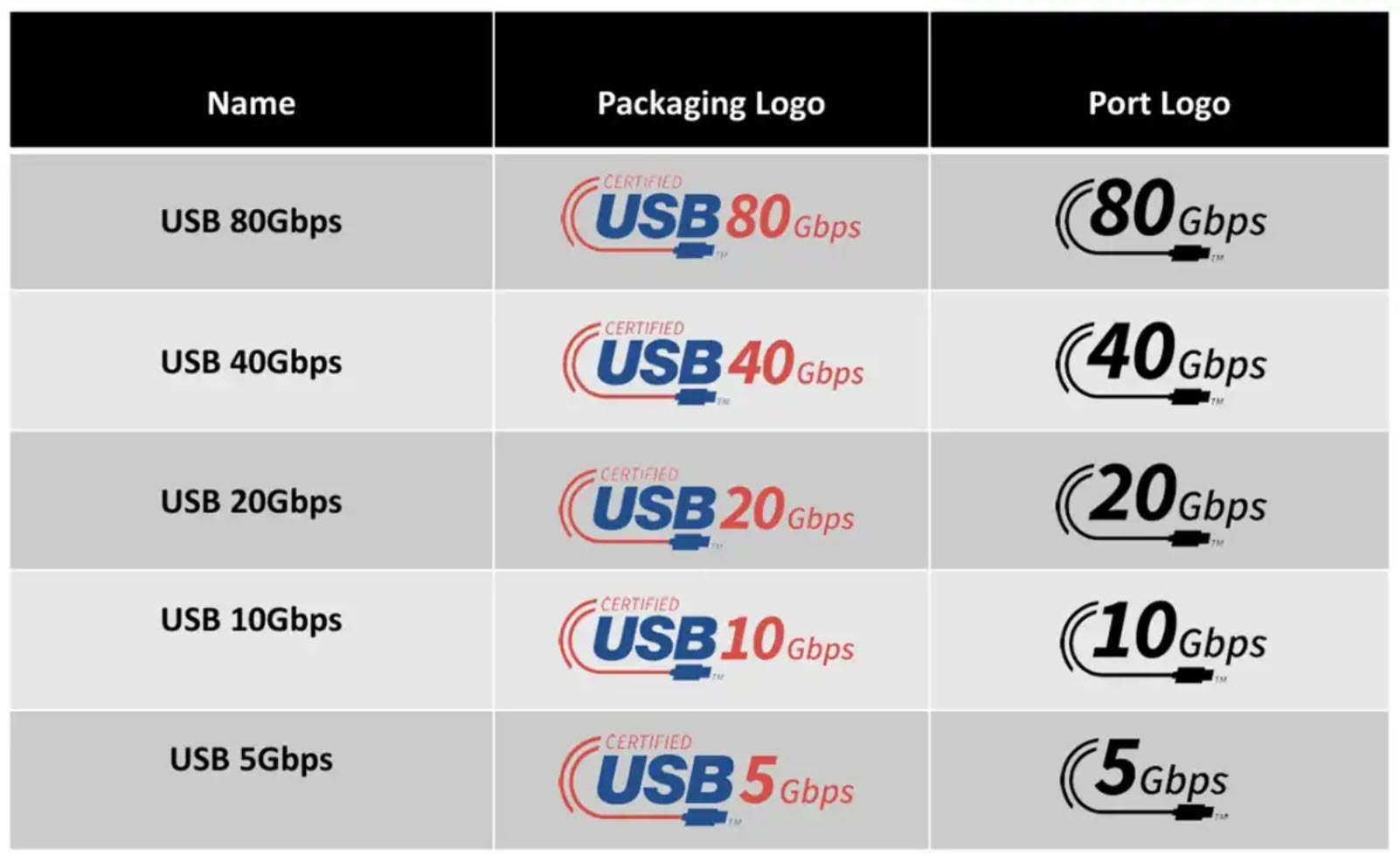
USB Gbps Guide Clear Explanation of Today’s 5–80Gbps USB Speeds

USB 5Gbps — The “Hold My Beer, I’m Fast Enough” Speed
Look, if USB had a middle child, this would be it. Five gigabits per second sounds impressive until you realize it’s basically the cousin who runs a 5K once a year and brags about it all Christmas. It works. It transfers your files. It doesn’t complain. And when you plug something in, chances are it’ll say, “Yeah man, I got this,” even though you know it’s secretly wheezing on the inside.
This is the speed tier where hard drives feel comfortable, basic flash drives don’t embarrass themselves too badly, and you can still pretend your aging laptop is “totally fine.” Sure, 5Gbps is cute. But once you see the numbers above it, you’ll wonder how you ever lived like this.
Gbps — Gigabits per second — is just a fancy way of saying how fast your data is hauling down the wire, and honestly, the name sounds way more complicated than it is. A gigabit is just a billion tiny digital dots, bits, the little on/off blips everything in tech is built from. Stack a billion of them together and shove them through a cable every second and boom, you’ve got 1 Gbps. The trick — and this is where people get tripped up after a couple beers — is remembering that a bit is not a byte. There are eight bits in one byte, so whatever Gbps number the marketing guys slap on the box, you divide by eight to get something that actually makes sense in the real world, like megabytes per second. So that “5 Gbps” USB port? It tops out around 625 MB/s if everything’s behaving, the planets align, and you haven’t kinked the cable behind your desk. Call it what you want, but Gbps just means “how fast this thing can move stuff,” and that’s all anyone really needs to know before pouring another drink and pretending USB naming isn’t a complete disaster.
USB 10Gbps — The “Feeling Pretty Good, Might Transfer a Movie Later” Tier
Ten gigabits is where USB finally puts on a clean shirt and acts like it has its life together. Suddenly everything feels quick. Your transfers stop dragging. Your external SSDs stop sounding like a clogged sink. You start believing in technology again.
This is the speed that makes you feel like you’re living in the future without actually needing to understand anything. It’s double the speed but also double the confidence. It’s the “I’m not rich, but I’m not eating gas station burritos anymore” of USB performance.
USB 20Gbps — The “Bro, This Is Getting Serious” Zone
Somewhere around 20Gbps, USB stops being casual and starts acting like it’s training for a triathlon. You plug in a device and suddenly the file transfer bar doesn’t even walk — it sprints. This is where external SSDs really stretch their legs, where video capture gear stops giving you side-eye, and where you start to feel an odd sense of power you didn’t expect from a cable.
Things load quickly enough that you start questioning your own life choices. Was it always this easy? Why did we waste years staring at progress bars when we could have been doing literally anything else? Twenty gigabits is USB saying, “Listen man, I’m not messing around anymore.”
USB 40Gbps — The “I Shouldn’t Drive Home” Speed
Forty gigabits per second doesn’t even feel real. This is the part of the night where everything is blurry but somehow you’re still dancing. External drives? Instantly recognized. 4K video editing? Laughably smooth. Docking stations? Running monitors like it’s no big deal.
USB at this level doesn’t just move data — it flexes. It walks into the room like it owns the place and dares Thunderbolt to say something. At 40Gbps, you don’t copy files. You teleport them. If 5Gbps is a jog, 40Gbps is a drunken bar fight with physics. And USB wins.
USB 80Gbps — The “Call an Uber, I’m Gone” Universe
This is where USB hits warp speed. Eighty gigabits isn’t a data rate, it’s a lifestyle. It’s the moment you realize we’re living in a world where a literal cable can handle more raw bandwidth than the average home network has dreams about. Monitors? Multiple. Drives? Absurdly fast. Docking into a workstation? It feels like you just plugged into the matrix.
USB at 80Gbps doesn’t whisper “performance.” It screams it across the parking lot while hugging a lamppost for stability. This is the top shelf stuff. Smooth, dangerous, unforgettable. And honestly, after experiencing it, everything else just feels slow, confused, and slightly hungover.
USB Gbps Logo Chart