
Update:
From this article, the Raspberry Pi 4 USB-C power port was designed outside of official USB-IF specifications, making it incompatible with many USB-C chargers and power supplies. You can read more from the link above. The analysis leading to this conclusion was conducted by well-known Google engineer Benson Leung.
The Raspberry Pi is a collection of small computer boards assembled in a simplified way to form the foundation of a computer system. The Raspberry Pi (also known as RPi) was released in February 2012 in the United Kingdom. Its original intent was to provide a low-cost, simple computer platform for students to learn and develop on.
The original model became far more popular than anticipated and quickly expanded beyond its intended educational market into areas such as robotics. The platform does not include peripherals such as keyboards or mice, nor does it ship in a case. It is, quite literally, a bare-bones product.
To give you an idea of its popularity, Raspberry Pi products sold more than 19 million units from their 2012 launch through the end of fiscal year 2018. This places the Raspberry Pi among the best-selling computers in the world, albeit with limited resources. Until now.
This week, the Raspberry Pi Foundation released the Pi 4. It is an impressive upgrade. Here are the key specifications:
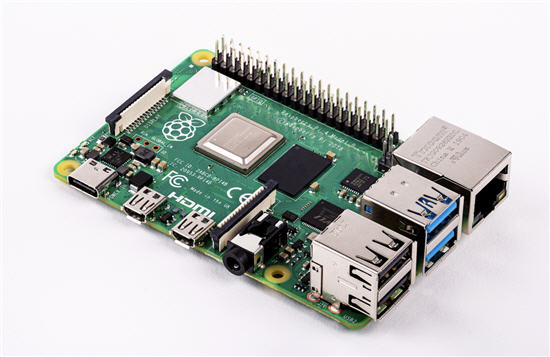
- A 1.5GHz quad-core 64-bit ARM Cortex-A72 CPU (~3× performance)
- 1GB, 2GB, or 4GB of LPDDR4 SDRAM
- Full-throughput Gigabit Ethernet
- Dual-band 802.11ac wireless networking
- Bluetooth 5.0
- Two USB 3.0 and two USB 2.0 ports
- Dual-monitor support at resolutions up to 4K
- VideoCore VI graphics supporting OpenGL ES 3.x
- 4Kp60 hardware HEVC video decoding
- Compatibility with earlier Raspberry Pi products
In addition to the hardware improvements, the Raspberry Pi Foundation says the new system includes an extensively modernized user interface, an updated Chromium 74 web browser, and a transition from USB micro-B to USB-C for power. The new connector supports an additional 500mA of current, ensuring a full 1.2A is available for downstream USB devices even under heavy CPU load.
The new boards are available to order now.
In the past, users have attempted running Windows on the Raspberry Pi platform, but performance was predictably slow. With this new configuration, we are curious to hear who has tried it and how it performs. Feel free to share your experience by emailing gmo @ getusb dot info.


