
Micron’s PCIe 6.0 SSD Is Fast — But the Real Story Is the Death of the SCSI Layer
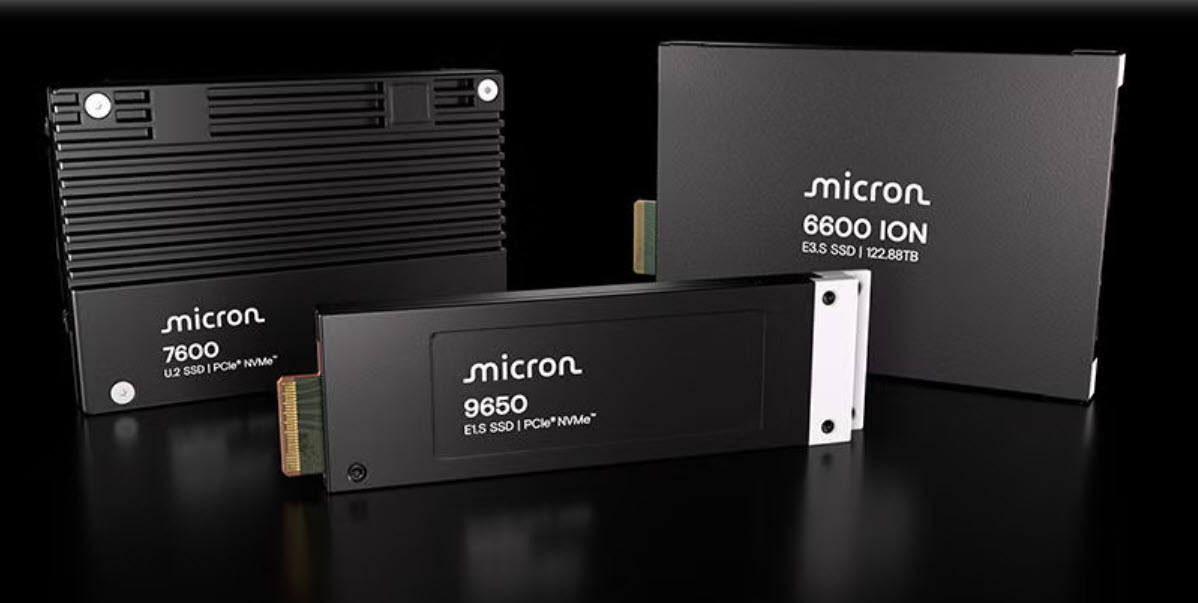
Micron just launched the first PCIe 6.0 SSD — the Micron 9650 — capable of sustained reads up to 28GB per second and write speeds over 14GB per second. That’s not incremental. That’s architectural.
On paper, it doubles the throughput of PCIe 5.0. Random reads reach into the multi-million IOPS range. For AI data centers feeding GPUs massive training datasets, this isn’t a marketing bullet point. It’s reduced idle time, tighter latency, and better utilization of extremely expensive silicon.
For consumers? Not yet relevant. You won’t suddenly boot Windows twice as fast. But that’s not the point.
What PCIe 6.0 Actually Improves
PCIe 6.0 moves to PAM4 signaling, doubling data transfer density per clock cycle. Same lanes. More information. More complexity. More heat. More validation engineering.
This is infrastructure hardware. It’s designed for racks full of accelerators running 24/7. Cooling matters. Power efficiency matters. CPU cycles matter.
When storage pushes 28GB per second, the bottleneck is no longer NAND. It becomes the operating system, driver stack, interrupt handling, and queue efficiency.
And that’s where the more interesting story begins.
The Quiet Change Inside Windows
Recent updates in Windows 11 improved NVMe performance by reducing reliance on legacy SCSI translation layers inside the storage stack. For years, even NVMe drives — which were designed for direct PCIe queue submission — still moved through architectural components originally built around SCSI command semantics.
SCSI made sense historically. It was stable. It was universal. It allowed operating systems to reuse mature storage frameworks. But NVMe was never meant to behave like SCSI.
NVMe was designed for parallel queues, deep command pipelines, and direct CPU interaction. Forcing that architecture to conform to older abstractions created unnecessary overhead.
Removing that translation layer reduces friction. Lower latency. Cleaner scaling. Better CPU efficiency.
That’s the real take-away.
The SCSI Command Layer: Necessary History
SCSI has been the backbone of storage compatibility for decades. USB mass storage still wraps SCSI commands inside USB transport. SATA uses SCSI-style command models under the hood. Even early NVMe support leaned on those same abstractions.
It was practical engineering. Preserve compatibility. Avoid breaking operating systems. Reuse trusted code.
But practical does not always mean optimal.
Modern NVMe hardware does not need to pretend it is a SCSI device. The removal of that translation layer aligns the software path with how the hardware was designed to operate.
Will This Change USB?
No — at least not directly.
USB mass storage is still SCSI over USB. That’s not going away anytime soon. The protocol is standardized, globally supported, and deeply embedded in firmware and operating systems.
If you want a deeper explanation of how that layer works today, see our breakdown here: USB Mass Storage Device Protocol — What Is It?
But the architectural shift inside Windows signals something important. Operating systems are finally treating high-performance storage as high-performance storage — not retrofitting it through legacy command models.
That may quietly pave the road for faster external NVMe devices, more efficient USB4 tunneling, and cleaner integration of next-generation SSD technology.
Micron’s PCIe 6.0 release grabs attention because of its speed. The deeper story is architectural maturity. When the software stack stops pretending NVMe is SCSI, the entire system becomes more efficient.
That’s progress.
About the Image & Source Material: The featured image used in this article originates from Micron’s official website and product materials. Technical specifications referenced here are based on Micron’s published data center SSD documentation and public release information. This analysis reflects our independent interpretation of the architectural changes and their broader storage implications.
For readers who want to review Micron’s enterprise storage portfolio directly, you can explore their data center SSD lineup here: Micron Data Center SSD Solutions . Their page provides detailed technical specifications, endurance ratings, form factors, and deployment considerations for AI and hyperscale environments.
Tags: Micron 9650, NVMe architecture, PCIe 6.0 SSD, SCSI command layer, Windows 11 storage
